
Blog
Softscaping Vs Hardscaping: What LA Homeowners Should Know


In a city where the outdoor square footage is often just as valuable as the indoor kind, deciding what to do with a yard in neighborhoods like Brentwood or Silver Lake is a high-stakes game.
For many Los Angeles homeowners, the backyard isn’t just a patch of grass; it’s an extra room, a sanctuary, and a significant chunk of their property value. But when it comes to the actual design, there’s a fundamental tug-of-war between two main categories: Softscaping vs Hardscaping.
It sounds like industry jargon, but it’s actually pretty simple. One side is alive, and the other isn’t. Finding the right balance between the two is the difference between a yard that feels like a lush oasis and one that feels like a sweltering parking lot.
Landscape Design Elements Best For Los Angeles: Living vs Non-Living Landscaping Features

Before digging into the dirt, let’s clarify the difference between softscape and hardscape in landscaping in LA. Hardscape refers to the non-living landscaping features that stay put regardless of the season. We’re talking about pavers, concrete, stonework, decks, and retaining walls.
These elements provide structure and function, creating those enviable outdoor living spaces where people actually spend their Friday nights. Because these features involve heavy materials and specialized labor, they typically represent the bulk of your initial investment.
Softscape, on the other hand, is the “soul” of the garden. It encompasses the landscape design elements that are literally alive; the trees, shrubs, flowers, and groundcover.
In Southern California, this increasingly means drought-tolerant plants and California natives that can survive a heatwave without breaking the bank on the water bill. These living elements are what provide the color, texture, and seasonal change that make a property feel like a home rather than a commercial plaza.
Why Los Angeles Homeowners Face a Unique Challenge
In a place like Malibu or the Pacific Palisades, the environment dictates the design. You aren’t just picking out pretty flowers; you’re managing steep hillsides, intense UV rays, and the ever-present threat of drought. Softscaping vs Hardscaping in Los Angeles homes requires a more strategic approach than in, say, the rainy Pacific Northwest.
Homeowners here have to think about how much sun hits the patio in July and whether those expensive irrigation systems and plant care routines are actually sustainable. Southern California is prone to recurring drought, making water-efficient landscaping a practical long-term consideration rather than a passing trend.
Know the Cost: Softscape vs Hardscape Cost in Los Angeles
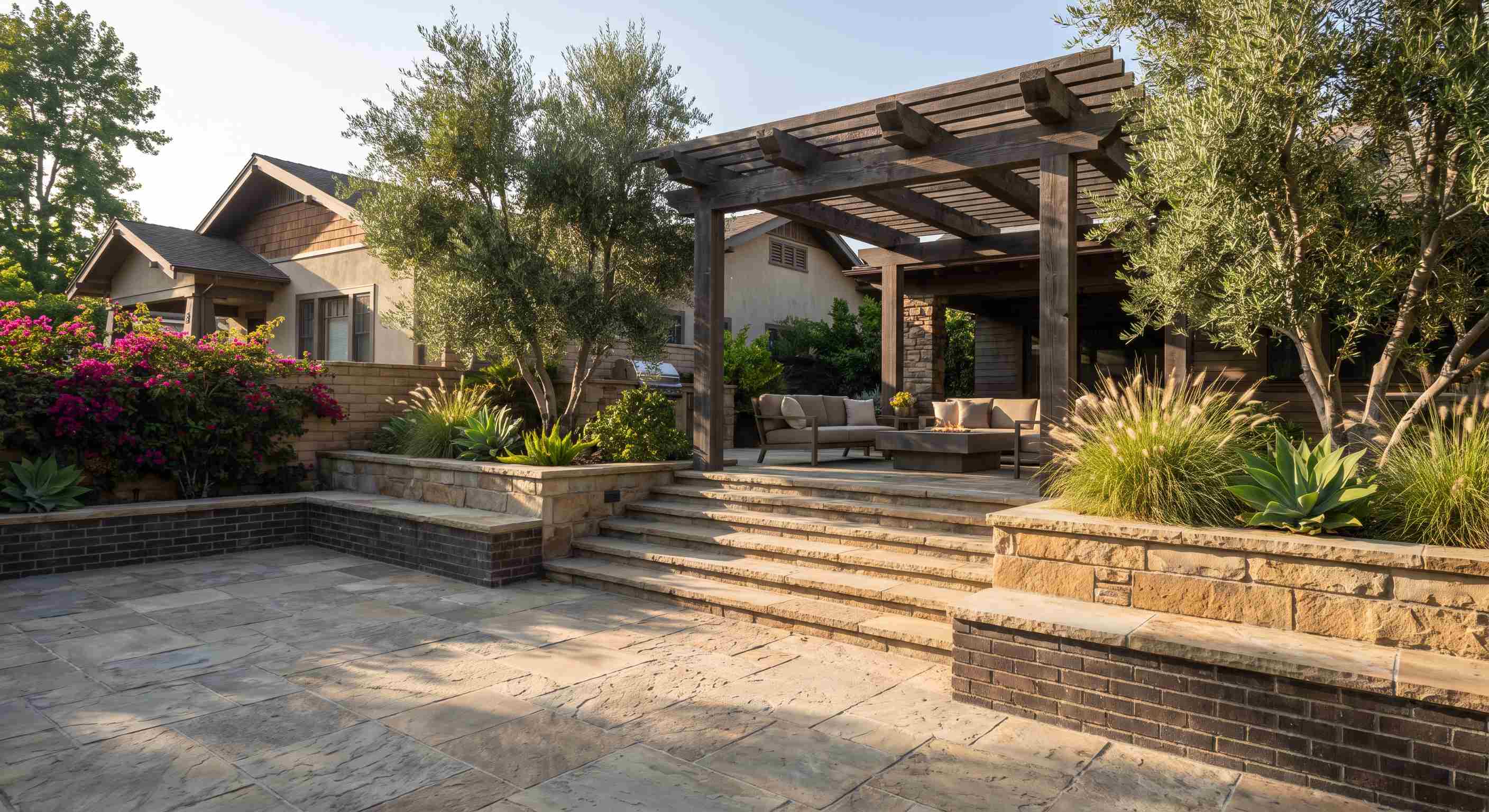
In high-end areas like Beverly Hills or Studio City, costs can escalate quickly. Generally, the softscape vs hardscape cost in Los Angeles leans heavily toward the hardscape side. Why? Because materials like natural stone and the labor for landscape installation costs are significant investments.
Hardscaping typically accounts for a larger portion of a landscape budget because it can involve excavation, grading, drainage, foundations, masonry, custom concrete, and other structural work. Softscaping can be less costly initially, but the price varies considerably depending on the size and maturity of the plants selected. Large specimen trees, mature hedges, and extensive planting can add substantially to the overall project cost.
The total cost of a professional landscape installation in Los Angeles can vary widely depending on the size of the property, site conditions, access, materials, and scope of work. A planting-focused refresh is a very different investment from a complete landscape renovation involving grading, drainage, retaining walls, patios, lighting, irrigation, or custom outdoor living features.
Managing these costs requires a clear understanding of your long-term goals. While the living vs non-living landscaping features both require capital, hardscape is a one-time structural expense, whereas softscape involves ongoing costs for irrigation systems and plant care. Investing more upfront in quality hardscaping often yields a more “finished” look that requires less financial “babysitting” over the following decade.
While a few bags of mulch and some lavender starts are relatively cheap, building a custom stone fireplace or a tiered Ipe deck is not. Well-designed hardscaping can also add significant value by creating functional outdoor living space and improving how the property is used. Hardscaping is a long-term improvement. It adds “usable” square footage, which is a massive selling point in a crowded real estate market.
Hardscaping: The Foundation of the Modern LA Yard

In many modern landscaping combining softscape and hardscape LA designs, the hardscape takes center stage. In places like Santa Monica, where lot sizes can be tight, creating a seamless transition from the living room to a stone patio is the goal.
Hardscaping ideas for drought-prone Los Angeles properties often include permeable pavers or decomposed granite (DG). These materials are great because they allow water to soak back into the ground rather than running off into the street, something the Los Angeles Department of Water and Power (LADWP) strongly encourages through various rebate programs.
Softscaping: Bringing the “Vibe” to the Space
Without softscaping, a yard feels cold. Imagine a beautiful Westwood home with a stunning concrete patio but zero greenery. It would feel like a sterile commercial courtyard. Softscaping softens the hard lines of the architecture.
The benefits of softscaping vs hardscaping in Southern California include natural cooling. Did you know that strategically placed trees can reduce a home’s cooling costs by up to 25%? In the Valley, where temperatures regularly spike over 100 degrees, that’s not just a “nice-to-have”, it’s a survival tactic.
Softscaping Ideas For Small Yards in Los Angeles
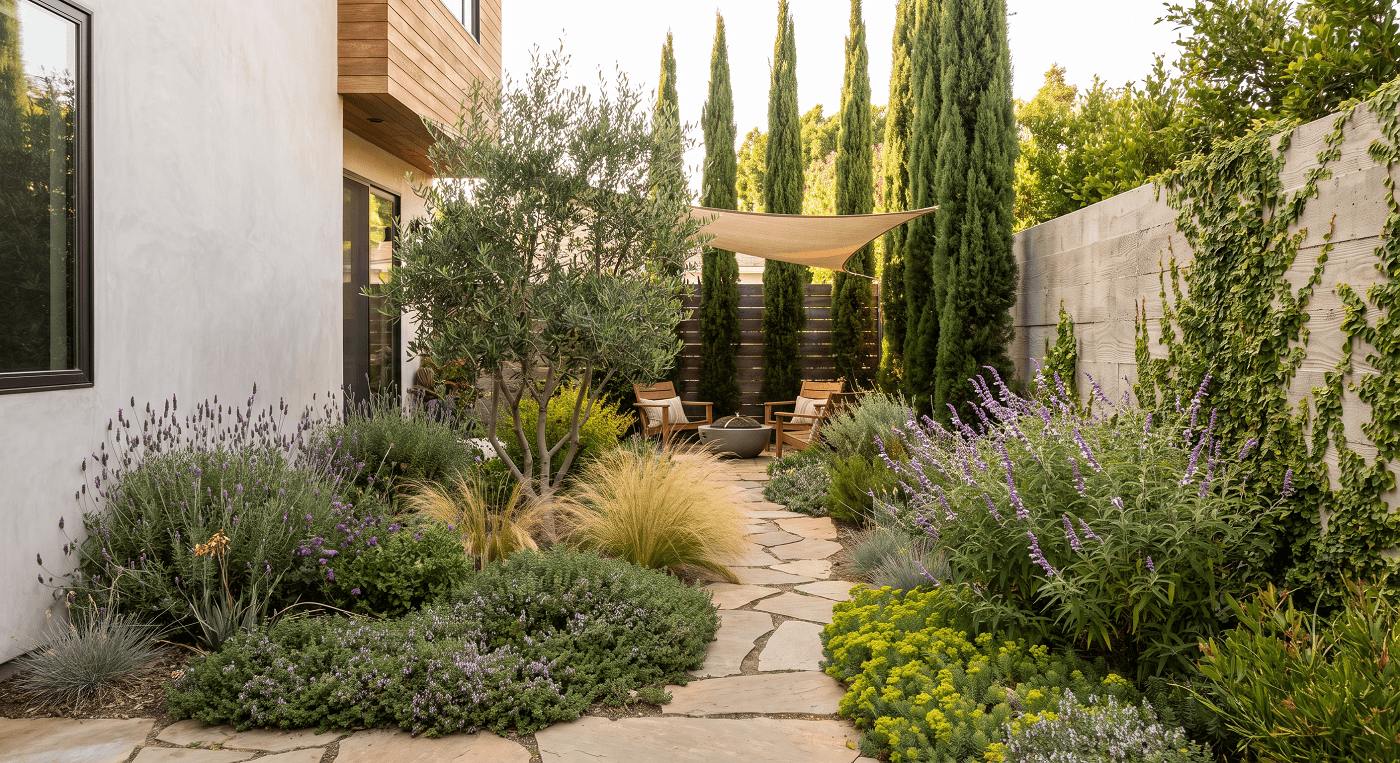
If you’re dealing with a smaller lot in Culver City, you have to be smart. You can’t fit a redwood tree, but you can use vertical softscaping. Think creeping fig on a privacy wall or tall, slender Italian Cypresses.
Softscaping ideas for small yards in Los Angeles often revolve around “layered” planting. Using different heights creates a sense of depth that makes a tiny yard feel way bigger than it actually is. Plus, it adds that crucial curb appeal landscaping factor that neighbors (and potential buyers) notice.
Balancing the Two: The Secret Sauce
So, what is the best balance of softscaping and hardscaping for LA homes? There isn’t one perfect ratio; the right balance depends on how you use the space. If you love hosting big dinner parties, you’ll want more hardscape (the patio). If you want a meditative retreat, lean into the softscape.
But it’s not just about aesthetics. You also have to consider drainage and grading solutions. If you pave over your entire backyard without a plan for where the rain goes (on the rare occasions it actually rains), you’re asking for a flooded crawlspace. Proper design ensures the living vs non-living landscaping features work together to manage water flow.
The Maintenance Factor: Low Maintenance Hardscaping vs Softscaping Los Angeles
Nobody wants to spend their entire Saturday weeding. When comparing low maintenance hardscaping vs softscaping Los Angeles, hardscaping almost always wins. Once a stone patio is down, you just need to power wash it occasionally.
Softscaping, however, comes with landscape maintenance requirements. Plants grow, they die, they need pruning, and they need water. This is why sustainable landscaping design is so popular in LA right now. By choosing well-suited native plants, you can reduce maintenance because those plants are adapted to the local climate.
Eco-Friendly Solutions: Xeriscaping vs Hardscaping
There’s a common misconception that “eco-friendly” means a yard full of rocks. That’s not true. Xeriscaping vs hardscaping is an interesting debate because xeriscaping actually uses plenty of softscape, just the right kind.
Eco-friendly softscaping vs hardscaping solutions Los Angeles homeowners love include replacing thirsty lawns with Kurapia or California native bunchgrasses. This reduces water use significantly while keeping the yard looking “soft” and green. According to the California Native Plant Society, native plant gardens use up to 83% less water on average.
Front Yard vs. Backyard: Different Rules Apply
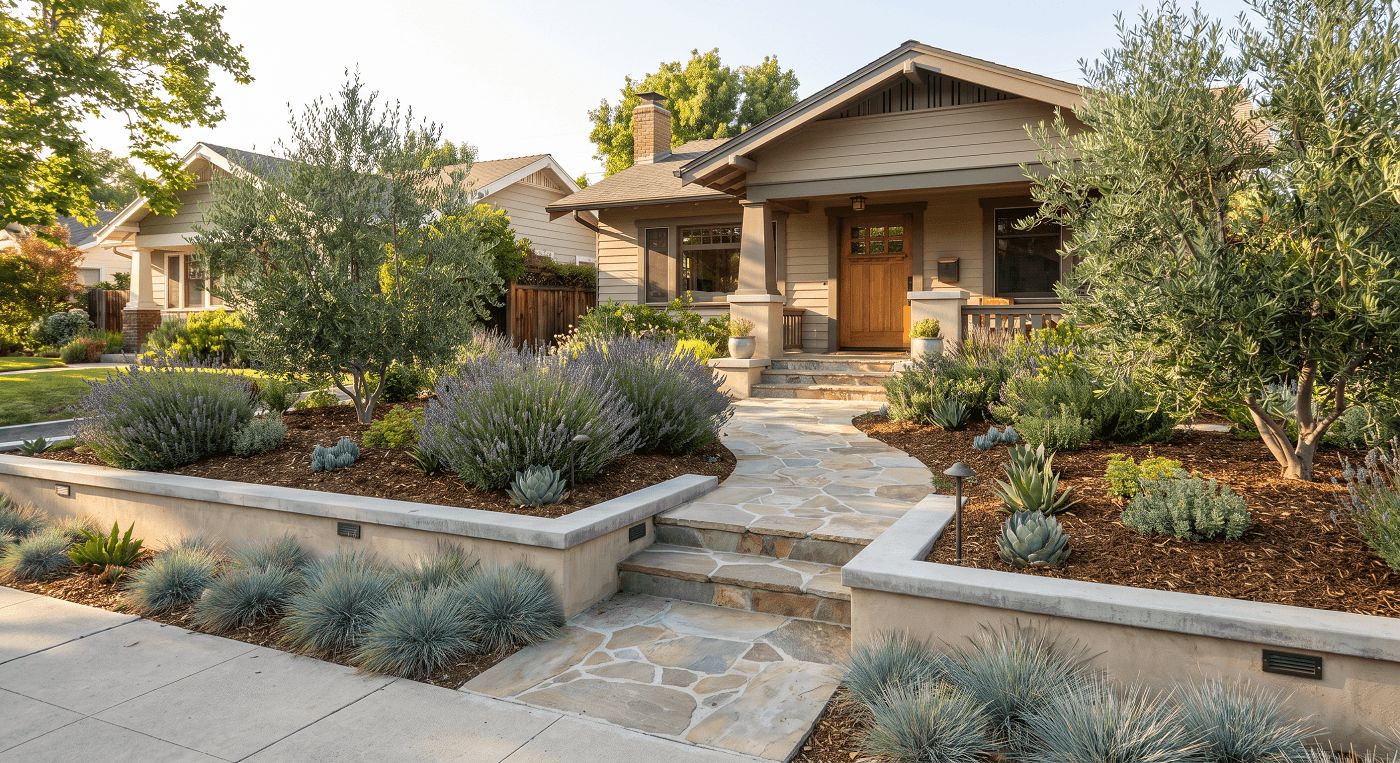
The way you handle a front yard softscape vs hardscape design in Los Angeles is usually different from the back. The front is all about the “handshake” of the house; it’s the first impression. You want enough softscape to make it feel welcoming.
In a backyard renovation softscaping and hardscaping LA project, functionality is king. This is where you put the fire pit, the outdoor kitchen, and the pool. The hardscape here has to be durable enough for foot traffic but designed well enough to look like a high-end resort.
How to Choose Between Softscaping And Hardscaping in LA
If you’re staring at a dirt lot in Pacific Palisades and wondering where to start, the first question shouldn’t be about plants, but about lifestyle. Do you envision late-night cocktails by a fire pit, or do you want to spend your Sunday mornings pruning organic herbs? The process of choosing between softscaping and hardscaping in LA is often a trade-off between “living” space and “looking” space. Hardscaping creates the floor for your life; softscaping creates the view.
If your home has a lot of architectural glass, typical of modern builds in the Hollywood Hills, you might want more softscape to provide privacy and “filter” the light. Conversely, if you have a massive family and limited indoor space, maximizing your hardscape to create a functional outdoor dining room is the smarter move. Always look at your site’s topography. Steep grades often demand hardscaping like retaining walls to make the land usable, while flat lots allow for more creative freedom with softscaped garden beds.
How Landscaping Affects Property Value in Los Angeles
Can professional landscaping add value to a Los Angeles home? It certainly can. In a market where outdoor living space is an important part of how buyers experience a property, thoughtful landscaping can improve curb appeal, functionality, and the overall impression of the home. Hardscaping can be especially valuable when it transforms previously underused areas into functional patios, dining areas, pathways, or other outdoor living spaces.
A professionally installed stone terrace or built-in kitchen is viewed as a permanent improvement, much like a bathroom remodel. However, don’t ignore the softscape’s role in the ROI of hardscaping vs. softscaping in Los Angeles homes.
While hardscaping provides the utility, the softscape provides the emotional hook. Mature trees and a well-curated, water-wise garden create an immediate sense of “home” that stone alone can’t achieve.
Curb appeal matters, too. Well-maintained lawns, healthy trees, established planting, and thoughtfully designed garden beds can make a strong first impression before a buyer ever walks through the front door. The bottom line is that a balanced approach, where hardscape provides function and softscape provides beauty, can enhance both the usability and appeal of a Los Angeles property.
Final Words
Navigating the softscaping vs hardscaping divide doesn’t have to be a headache. By understanding the local climate, the costs involved, and the specific needs of your neighborhood, you can create a space that’s both beautiful and functional.
Los Angeles is a city that celebrates the outdoors. Whether you’re looking for hardscaping ideas for drought-prone Los Angeles properties or a lush, flower-filled sanctuary, the key is intentionality. Don’t just fill space, design it. After all, your yard is the one part of your home that actually grows more beautiful with time.
One thought on “Softscaping Vs Hardscaping: What LA Homeowners Should Know”