
Blog
10 Best Native Plants for a Luxurious Los Angeles Landscape

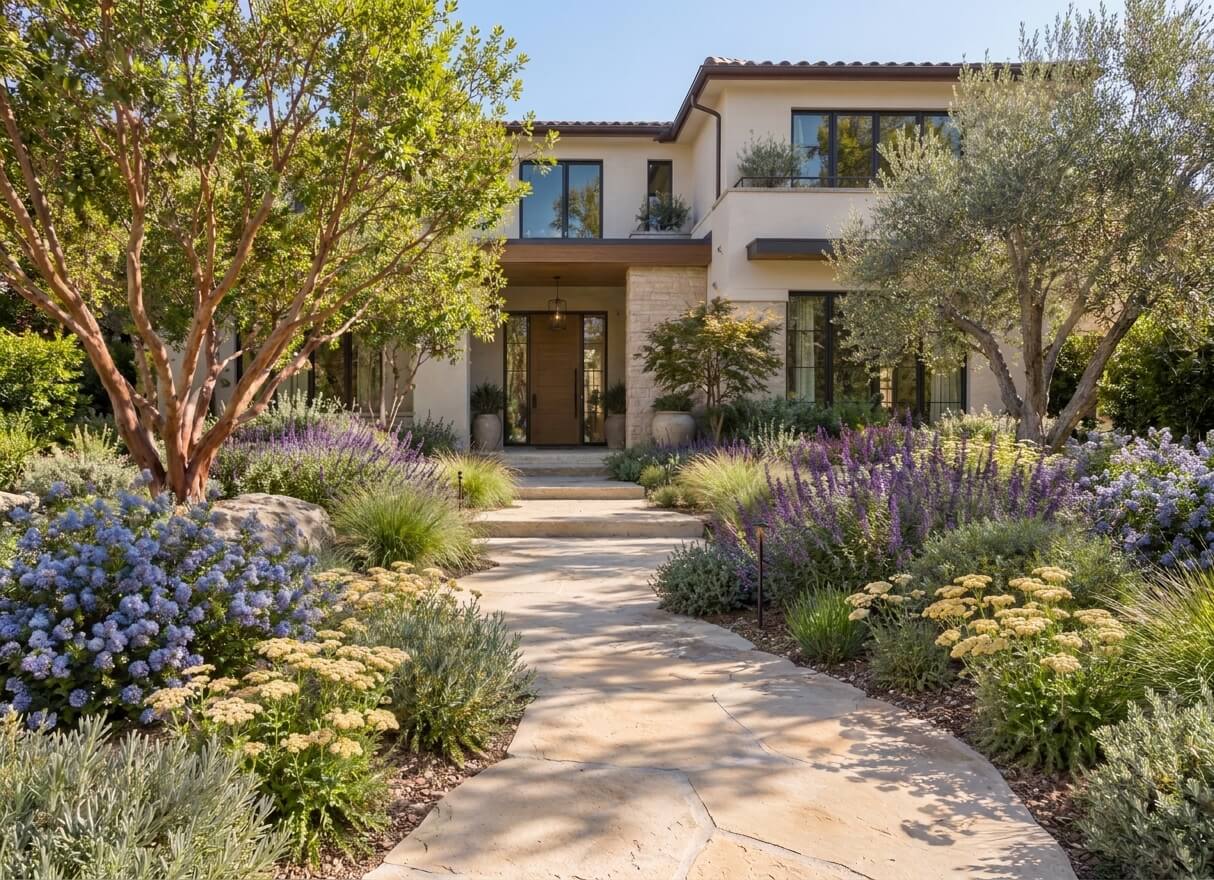
The dream of a lush, high-end garden in Los Angeles can hit a dry, dusty wall pretty quickly. We’ve all seen it: a homeowner in Pacific Palisades or Brentwood tries to recreate a manicured Hamptons vibe, only for the plants to crisp up the moment a Santa Ana wind hits. But here’s the secret: choosing native plants doesn’t mean settling for a yard that looks wild, scrubby, or unfinished.
Designing a luxurious drought-tolerant landscape is really about curation. It’s moving away from the scattered-wildflower look and toward architectural plants, layered textures, and intentional repetition that complement everything from a modern farmhouse to a restored Spanish Colonial.
In neighborhoods like Beverly Hills and Santa Monica, the outdoor space is an extension of the home. It should feel polished, intentional, and, above all, healthy enough to actually thrive in Southern California.
The New Standard for Los Angeles Landscapes
For years, “native landscaping” had a reputation for meaning scrubby, brown, and a little too wild for a polished residential garden. But that’s changing fast. Modern Los Angeles landscapes are showing just how refined California natives can look when they’re used intentionally.
Instead of scattering a dozen different plants around the yard, designers are using structured natives, repeated plantings, strong textures, and evergreen forms to create landscapes that feel clean, layered, and expensive.
In neighborhoods like Brentwood and Pacific Palisades, the outdoor space is an extension of the home. When you’re investing in custom hardscaping, pools, outdoor kitchens, and beautiful architecture, the planting shouldn’t feel like an afterthought. It should look like it belongs there.
10 Native Plants That Make a Landscape Look Luxurious
1. Bush Anemone (Carpenteria californica)
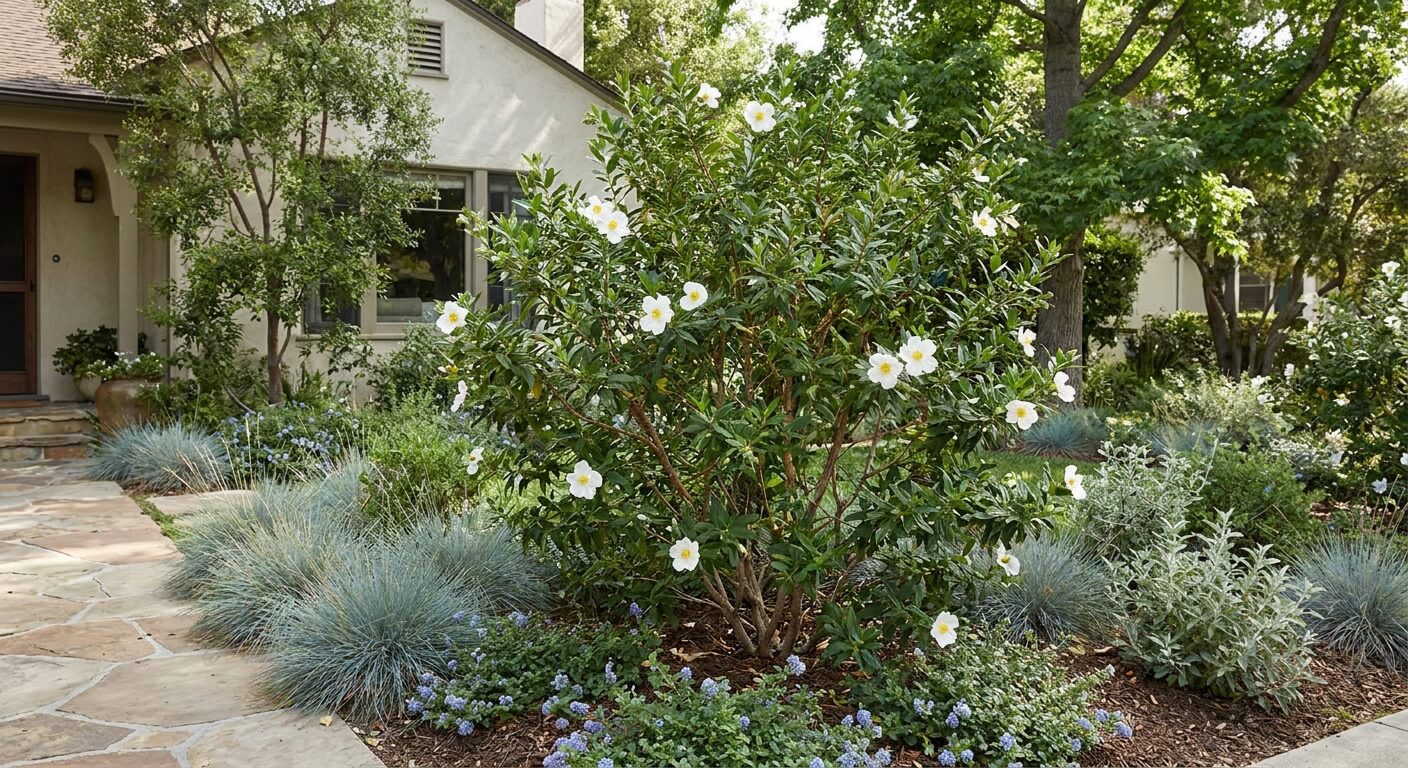
If you’re looking for a native plant that bridges the gap between a traditional garden and a California hillside, Bush Anemone is one of the best. It has a polished, almost old-world look that doesn’t immediately scream “native plant.”
Appearance
Bush Anemone is an evergreen shrub with dark green foliage and fragrant white flowers with bright yellow centers that appear in late spring and early summer. The combination feels soft and refined, especially near entryways, courtyards, and shaded patios. Theodore Payne Foundation lists it as an evergreen shrub with fragrant white flowers and notes that it performs especially well in light shade.
Great For?
Entryways, shaded borders, and elegant foundation planting. Its dense growth can soften hardscape, frame a front door, or create a lush backdrop without looking overly formal.
Requirements
This one is a little Goldilocks. It likes good drainage and does especially well with light shade or part sun, particularly inland. Along the coast, it can tolerate more sun, but in hotter areas like Studio City, some afternoon protection is a much better idea.
2. Howard McMinn Manzanita (Arctostaphylos densiflora ‘Howard McMinn’)
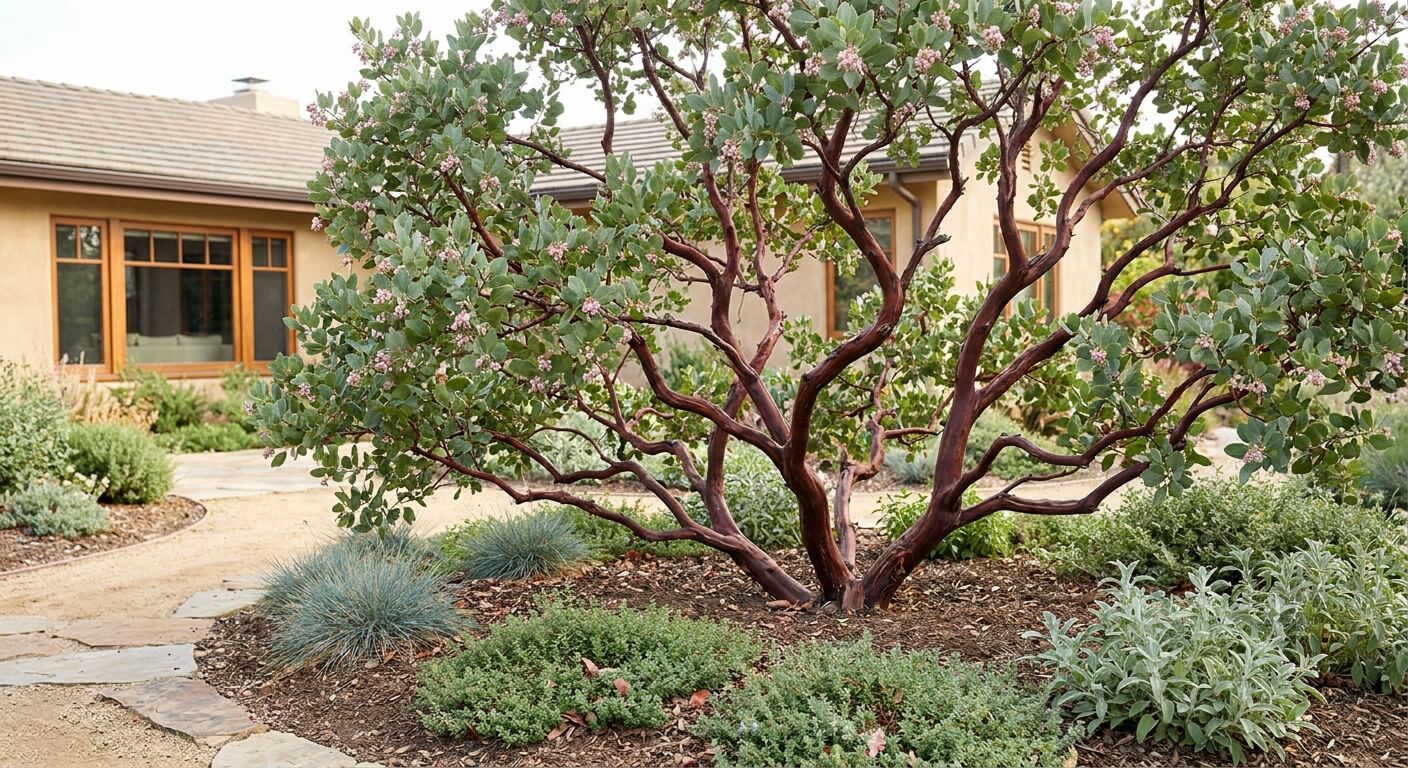
Manzanitas are some of the most sculptural California natives you can put in a landscape, and ‘Howard McMinn’ is one of the easier varieties to work with. The smooth burgundy bark, evergreen foliage, and delicate winter flowers make it feel polished without trying too hard. UC Davis describes it as one of the easiest manzanitas and notes that it stays around 5–8 feet tall and wide.
Appearance
The real showstopper is the smooth reddish-burgundy bark, especially once the plant matures and the branching structure becomes more visible. Small pink to pale-pink flowers appear in winter to early spring, giving it seasonal interest without turning the whole garden into a flower bed.
Great For?
Architectural focal points, entry gardens, and layered native planting. It works beautifully as a standalone specimen where the bark can actually be seen, or repeated through a larger planting for a more structured look.
Requirements
‘Howard McMinn’ is more adaptable than many manzanitas, but it still wants good drainage and careful watering once established. Full sun works well, although afternoon shade can be helpful in hotter inland areas. And this is not the plant to love to death with a hose. Deep, infrequent watering is much better than keeping the soil constantly wet.
3. California Coffeeberry (Frangula californica)
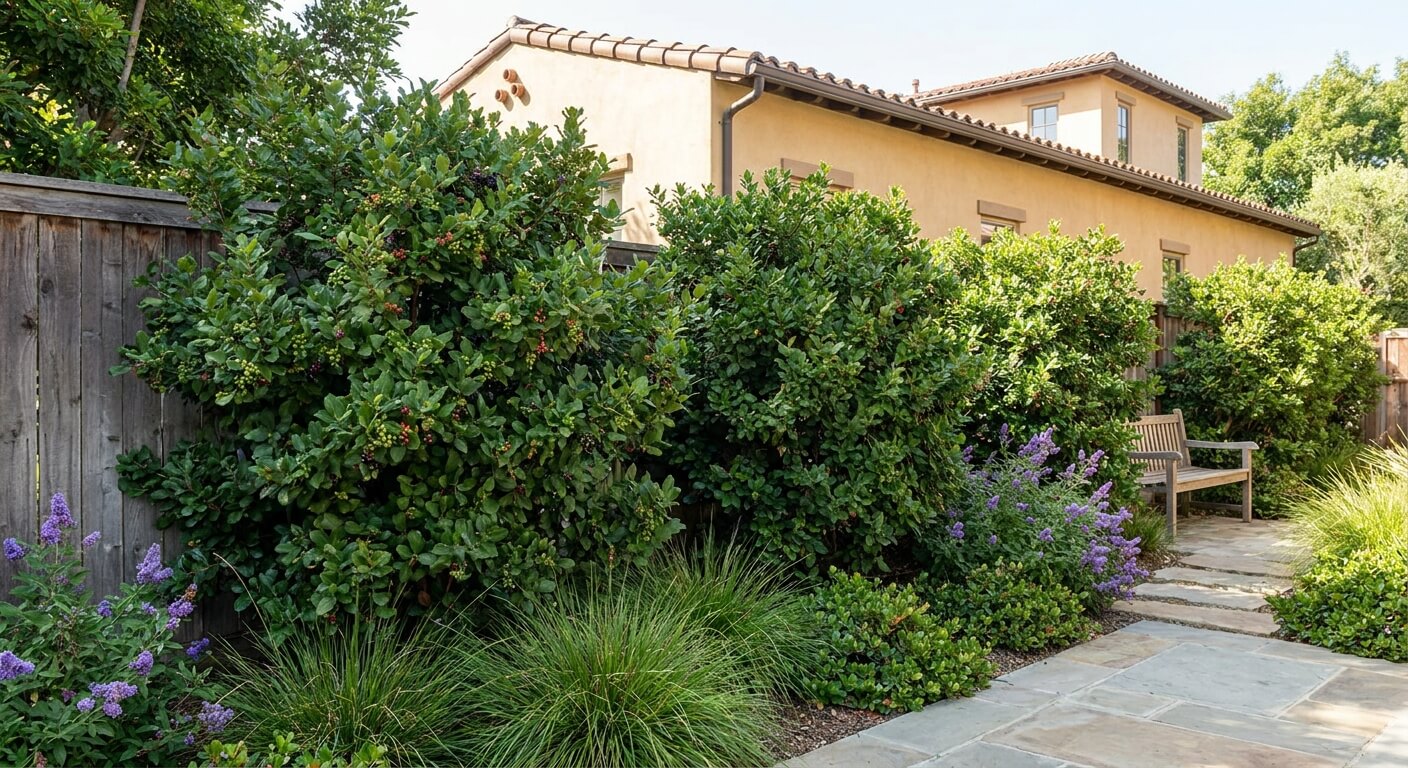
If you love the polished look of a classic hedge but want something that actually belongs in California, Coffeeberry is a really good one to know. It gives you a dense evergreen structure without automatically defaulting to boxwood or privet.
Appearance
California Coffeeberry has deep green evergreen foliage and small flowers that aren’t especially showy to us, but pollinators love them. The berries start out green, then shift through red before ripening to nearly black, which adds some subtle seasonal interest. UC Davis notes that the species can range quite a bit in size, while compact cultivars are available for more controlled landscapes.
For a more structured design, ‘Mound San Bruno’ is especially useful because it stays denser and more compact than the straight species, generally around 5 feet tall.
Great For?
Privacy, screening, and structured evergreen planting. It can work beautifully along property lines, behind seating areas, or as a softer alternative to a very formal hedge. In neighborhoods like Hancock Park or Westwood, it gives you that lush, finished look without feeling overly manicured.
Requirements
Coffeeberry is surprisingly adaptable, tolerating sun, part shade, and even quite a bit of shade depending on the cultivar and site. Once established, it’s also low-water and generally doesn’t need much maintenance beyond occasional shaping.
4. Island Alumroot (Heuchera maxima)

For those shaded spots where nothing seems to grow, Island Alumroot is one of those plants that makes the whole area suddenly feel finished. It gives you lush texture without needing the kind of water-hungry planting people usually associate with a shady garden.
Appearance
Island Alumroot forms soft evergreen mounds of large, rounded green leaves, then sends up airy stems of tiny white to pale pink flowers in spring. It has a much softer look than the more architectural plants on this list, which makes it especially useful for balancing out stone, concrete, or heavier shrubs. Theodore Payne notes that it’s native to the Channel Islands and naturally grows in clumping rosettes.
Great For?
Dry shade, under-oak planting, shaded courtyards, and layered groundcover. It looks especially beautiful planted in drifts beneath mature trees, where the foliage creates that lush, almost carpet-like effect. In places like Pacific Palisades or the Hollywood Hills, it can help make a shaded garden feel intentional instead of forgotten.
Requirements
This is a shade to part-shade plant, and it appreciates occasional to moderate water, especially during hot weather. It’s a particularly good choice for dry shade and can even tolerate heavier clay soils, which makes it more adaptable than it looks.
5. Toyon (Heteromeles arbutifolia)
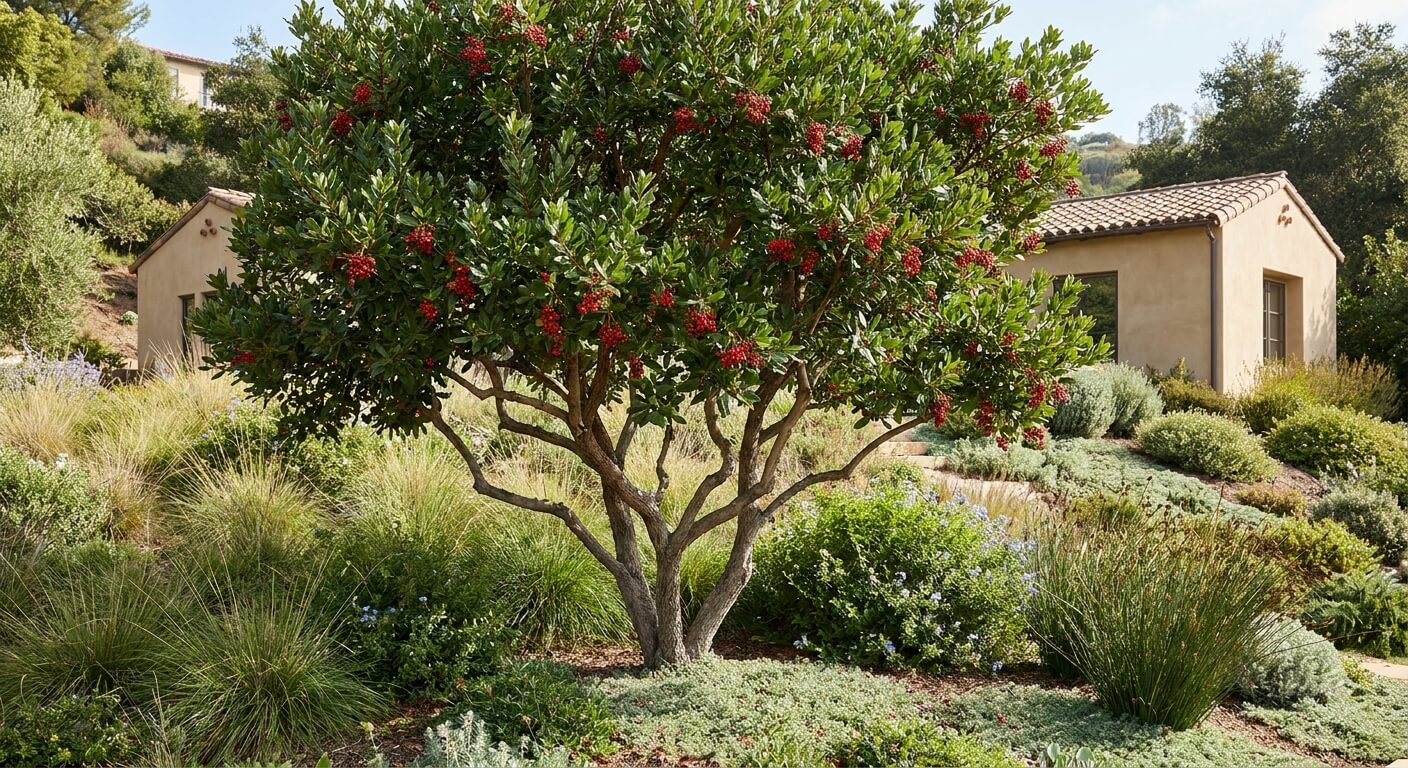
Often called “Hollywood Holly,” Toyon is deeply rooted in Los Angeles history and identity. It’s one of those California natives that can look completely different depending on how you use it. Left more natural, it becomes a large evergreen shrub. With thoughtful pruning, it can be trained into a beautiful multi-trunk small tree that feels surprisingly architectural.
Appearance
Toyon has dark green, leathery foliage, clusters of small white flowers in summer, and bright red berries that appear in fall and winter. That combination gives it year-round structure with just enough seasonal drama to keep things interesting.
Great For?
Statement planting, privacy, hillsides, and larger residential landscapes. It works especially well when you need a substantial evergreen plant that doesn’t feel like another generic hedge. Trained as a multi-trunk specimen, it can add height and character to a new landscape almost immediately.
It also feels particularly at home in the canyons and foothills around Los Angeles, where a more natural California palette makes sense.
Requirements
Once established, Toyon is very drought tolerant and relatively unfussy. It can handle full sun or part shade and is more tolerant of heavier soils than many California natives, including clay.
6. Canyon Prince Wild Rye (Leymus condensatus ‘Canyon Prince’)
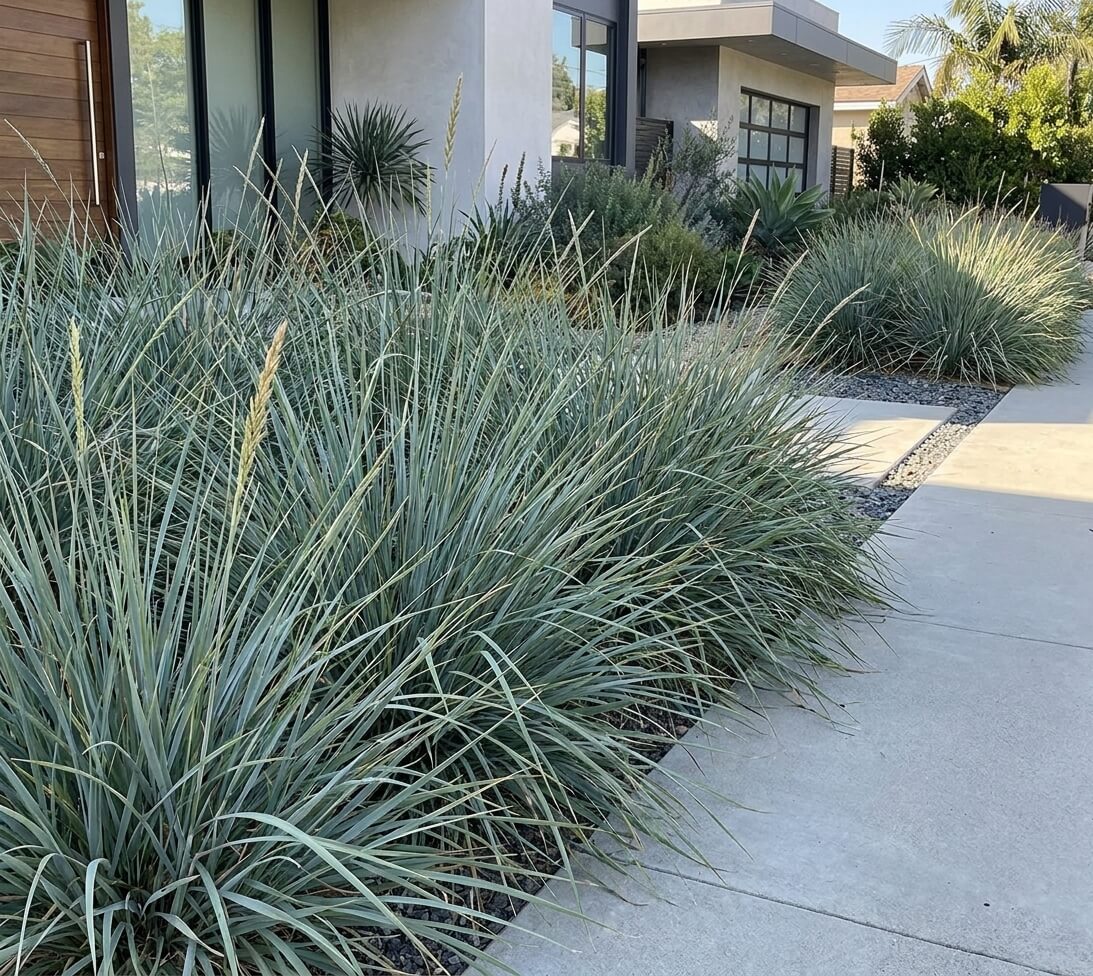
For a more modern, minimalist landscape, Canyon Prince is one of those plants that instantly looks intentional. The blue-gray foliage gives you color without flowers, and its upright form works especially well against clean architecture and darker hardscape.
Appearance
‘Canyon Prince’ has striking silver-blue to blue-green blades that grow in substantial clumps and can reach around 3 to 4 feet tall. In summer, it sends up wheat-colored flower spikes that add a little movement without making the plant look messy.
Great For?
Modern borders, slope planting, and rhythmic repetition. It looks especially good planted in broad groups against poured concrete, dark fencing, or simple stone walls. In places like Malibu or Santa Monica, that cool-toned foliage can look incredibly polished against warmer architectural materials.
It also spreads by rhizomes, so it can be useful where you want the planting to fill in rather than sit there as one lonely grass forever.
Requirements
Canyon Prince does best in sun near the coast and can appreciate some afternoon shade farther inland. It’s drought tolerant once established, but occasional deep watering can help keep the foliage looking fuller and more vibrant through summer. It can spread, so give it room and expect a little maintenance if you want to keep it within a very precise footprint.
7. Winnifred Gilman Cleveland Sage (Salvia clevelandii ‘Winnifred Gilman’)
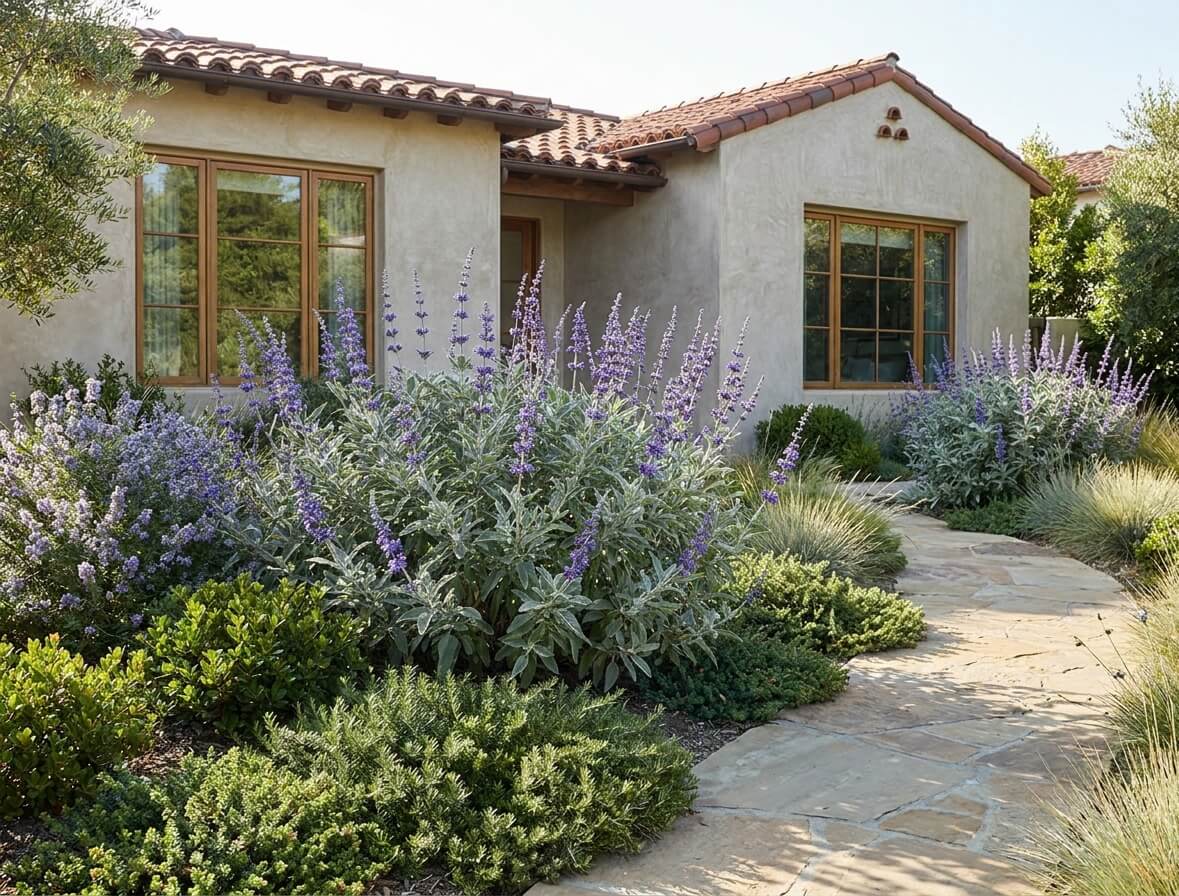
If you want a native plant that smells as good as it looks, this one earns its spot. ‘Winnifred Gilman’ has that distinctly Southern California combination of silvery foliage, intense blue-purple flowers, and an herbal fragrance that hits you when the leaves warm up in the sun.
Appearance
The foliage is soft gray-green and naturally aromatic, while tall flower stems rise above the plant with deep violet-blue blooms arranged in dramatic whorls. It has enough structure to feel intentional, but still brings some movement and softness into the landscape.
Great For?
Sunny borders, entry gardens, pollinator planting, and areas near patios or seating. Put it somewhere people actually walk past so you can enjoy the fragrance instead of hiding it in the back corner of the yard.
It works especially well in Los Angeles landscapes that need color without feeling overly floral, and bees and hummingbirds are big fans too.
Requirements
Cleveland Sage loves full sun, excellent drainage, and relatively dry conditions once established. It handles Southern California heat beautifully, but like a lot of native sages, it does not want to sit in constantly wet soil.
Basically, give it sun, don’t drown it, and let it do its thing.
8. Western Redbud (Cercis occidentalis)
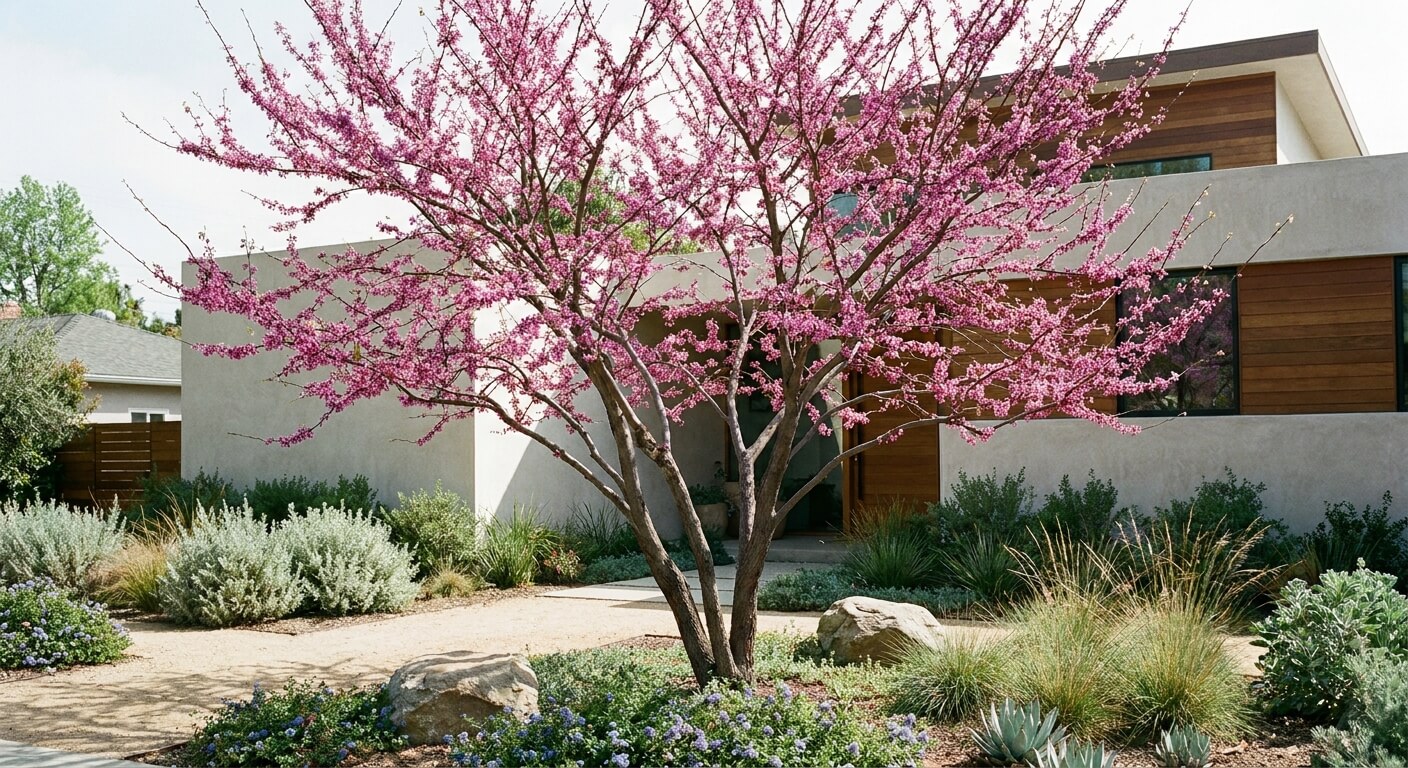
If you want a small native tree that can actually carry a whole corner of the landscape, Western Redbud is a beauty. In early spring, the bare branches light up with vivid magenta-pink flowers before the leaves even arrive, which gives it a really sculptural look. UC sources describe it as a small tree or large shrub, usually around 12–20 feet tall and wide.
Appearance
Western Redbud has heart-shaped leaves, delicate branching, and brilliant spring flowers that appear directly along the stems. In fall, the foliage can shift to yellow, gold, and sometimes red tones, especially where there’s more seasonal chill. Even after the leaves drop, the branching structure still looks beautiful under landscape lighting.
Great For?
High-impact focal points, smaller yards, courtyards, and native planting schemes. It works especially well when you want a tree that brings seasonal drama without taking over the entire property.
In a Los Angeles landscape, it can be a really elegant alternative to forcing a more traditional East Coast flowering tree into a climate it doesn’t love.
Requirements
Western Redbud does best in full sun to light shade and prefers good drainage. It’s drought tolerant once established, but flowering is generally better with some winter chill, which is why it can perform especially well in inland and canyon areas that experience cooler winter nights than the immediate coast.
9. Shaw’s Agave (Agave shawii)
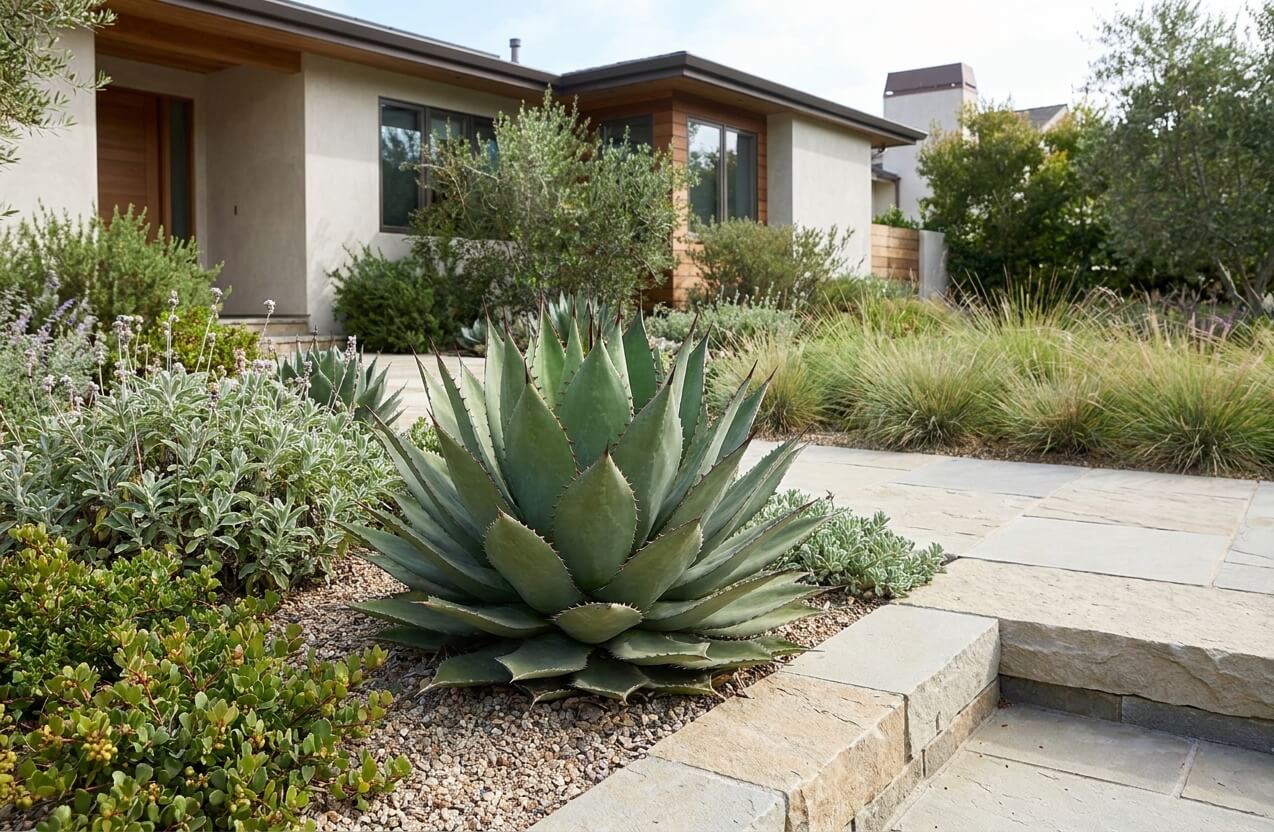
If you want something sculptural without planting another giant Agave americana, Shaw’s Agave is a much more refined native option. It has a strong architectural shape, but stays compact enough to work in residential landscapes without eventually eating the entire bed.
Appearance
Shaw’s Agave forms tight evergreen rosettes of thick green to blue-green leaves with pronounced reddish-brown teeth along the edges. Mature plants can also send up a dramatic flower stalk several feet tall, which makes the plant look even more sculptural. Theodore Payne lists it at roughly 2 feet tall by 3 feet wide, with flower stalks reaching 7–12 feet.
Great For?
Modern focal points, containers, coastal gardens, and structured succulent planting. It looks especially good where you can appreciate the rosette shape up close, whether that’s beside a clean concrete wall, near an entry, or in a large ceramic pot.
Because it naturally occurs along the San Diego and Baja California coast, it also feels right at home in a Southern California landscape rather than like a desert plant dropped into the wrong setting.
Requirements
Shaw’s Agave likes sun, fast-draining soil, and very little water once established. It’s also considered rare in California, so I’d treat it more like a special specimen plant than something you mass-plant across an entire property.
Basically, give it drainage, give it room, and let the architecture of the plant do the work.
10. Evergreen Currant (Ribes viburnifolium)
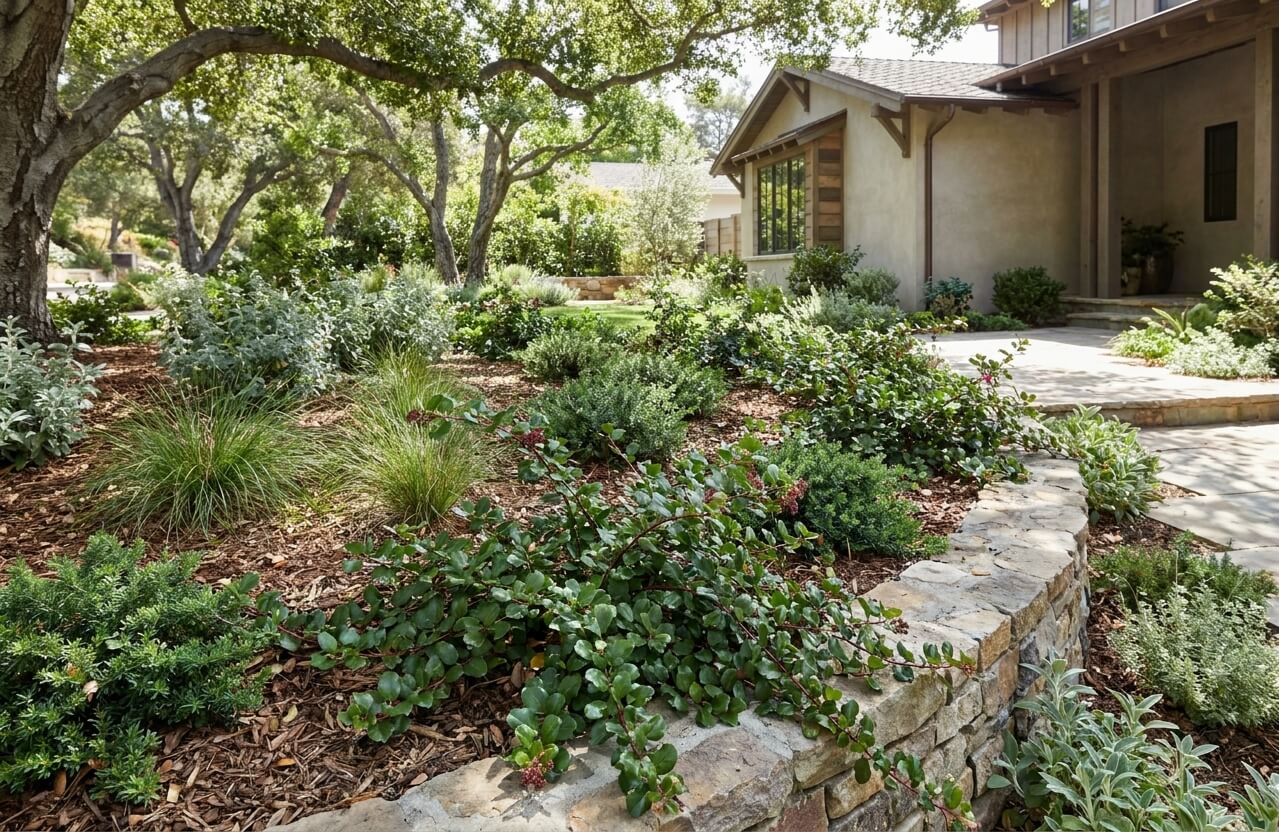
If you want that deep green, lush look in a shady part of the garden, Evergreen Currant is a little bit of a secret weapon. It gives you richness and texture without needing the kind of constant watering people usually associate with a shady, leafy garden.
Appearance
Evergreen Currant is a low, spreading evergreen shrub with glossy dark green leaves, reddish stems, and small red to burgundy flowers in late winter and early spring. The leaves are also fragrant when crushed, which is why you’ll sometimes see it called Catalina Perfume.
Great For?
Dry shade, under trees, slopes, and high-end groundcover. It looks especially beautiful spilling over a low stone wall or filling in beneath a canopy where other plants struggle.
It’s one of those plants that can make a garden feel finished and expensive without screaming for attention.
Requirements
Evergreen Currant prefers shade to part shade and is especially useful in those tricky dry-shade areas under mature trees or along north-facing walls. Once established, it has relatively low water needs and can spread to around 5–6 feet wide, so give it room to do its thing.
Effective Tips For a Luxurious Landscape Look

Choosing beautiful native plants is only half the equation. The way they’re arranged, repeated, and paired with the rest of the property is what makes the landscape feel high-end instead of random.
Mass Planting and Repetition
One of the biggest differences between a professionally designed landscape and a yard that feels pieced together is repetition.
Instead of buying one of ten different plants, use several of the same plant in a deliberate grouping. A long sweep of Canyon Prince Wild Rye or a broad mass of flowering sage creates far more visual impact than scattering individual plants everywhere.
That repetition gives the landscape rhythm, structure, and a calmer overall look, which is a huge part of what makes luxury gardens feel intentional.
Basically, less “one of everything,” more “we actually had a plan.”
Use High-End Materials
The plants may be the stars, but the hardscape is the stage. Even a beautiful native planting can lose some of its impact if it’s paired with materials that feel cheap, overly busy, or disconnected from the architecture.
Materials like natural stone, smooth concrete, warm wood, and refined gravel or pebbles can make native planting feel much more intentional. The contrast between softer, organic plants and crisp architectural materials is a big part of that polished California luxury look.
The goal isn’t to use the most expensive material possible. It’s to choose finishes that feel cohesive with the home and let the planting stand out instead of competing with it.
Professional Lighting
Don’t let a beautiful landscape disappear the second the sun goes down. Thoughtful landscape lighting can completely change the way a garden feels at night, especially when it highlights the plants and architectural details you actually want people to notice.
Use low-voltage lighting to uplight the mahogany bark of a Manzanita, highlight the sculptural form of a Western Redbud, or wash soft light across a stone wall or pathway. The goal is to create depth and atmosphere, not make the yard look like a runway.
In neighborhoods like Bel Air or Studio City, good lighting can make the outdoor space feel like an extension of the home long after sunset.
Basically, light the moments, not every single plant.
Use Native Plants Strategically: Planning Matters
Landscaping in Los Angeles is all about microclimates. What thrives near the coast in Santa Monica may struggle through the summer heat of Encino, and a plant that loves a sunny hillside may be miserable in a shaded courtyard.
Hydrozoning
Group plants with similar water needs together so your irrigation system isn’t trying to keep completely different plants happy on the same schedule.
Keep plants that appreciate a little more moisture, like Island Alumroot, separate from very low-water plants like Shaw’s Agave and Manzanita. It makes irrigation more efficient and, more importantly, keeps you from accidentally drowning the plants that prefer things dry.
Pay Attention to the Soil
Los Angeles soil can change dramatically from one neighborhood to the next. Some properties have heavy clay, while others drain quickly.
The answer isn’t automatically to dump compost into every planting hole. California natives generally do best when the soil conditions are matched to the plant, so drainage and proper placement matter more than trying to turn every yard into perfect garden soil.
Plants like Toyon can tolerate heavier soils, while Manzanita needs excellent drainage and really does not appreciate wet feet.
Mulch for Health and Style
Mulch helps reduce evaporation, moderate soil temperature, and keep weeds down, but it can also make a landscape look much more finished.
Skip the bright dyed mulch and use natural wood mulch or another material that complements the architecture and planting palette. Just keep mulch pulled back from plant crowns and trunks instead of piling it right up against them.
A good mulch layer should look intentional while quietly doing a lot of the boring work behind the scenes.
The Importance of Maintenance
Even a “low-maintenance” native garden still needs some love to keep it looking polished. The goal isn’t constant fussing, but thoughtful maintenance that works with the natural shape of the plants instead of fighting against it.
Native shrubs generally look best when they’re pruned selectively for shape, airflow, and health, rather than repeatedly sheared into tight boxes. That keeps plants like Manzanita, Coffeeberry, and Toyon looking intentional without stripping away the character that made you choose them in the first place.
It also helps to stay ahead of dead growth, irrigation issues, weeds, and plants that are starting to crowd each other. A luxury landscape should still feel relaxed and natural, but never neglected.
Basically, low-maintenance does not mean no-maintenance. It just means the work should be smarter.
Final Word
The shift toward native plants in Los Angeles isn’t just a trend; it’s a response to our changing environment and the realities of landscaping in Southern California. But sustainability doesn’t have to mean sacrificing style.
California natives can be sculptural, evergreen, colorful, architectural, and incredibly refined when they’re chosen and placed well. Plants like Bush Anemone, Manzanita, Toyon, and Western Redbud prove that a climate-conscious landscape can still feel polished, intentional, and luxurious.
Your home is probably one of your biggest investments, and the landscape should feel like part of it. Whether you’re looking out over the Pacific, tucked into a canyon, or living on a quiet Los Angeles street, a thoughtfully designed native garden can feel luxurious, grounded, and completely at home in Southern California.
2 thoughts on “10 Best Native Plants for a Luxurious Los Angeles Landscape”