
Blog
What Types of Plants Are Involved in Landscaping? A Guide to Los Angeles Landscapes

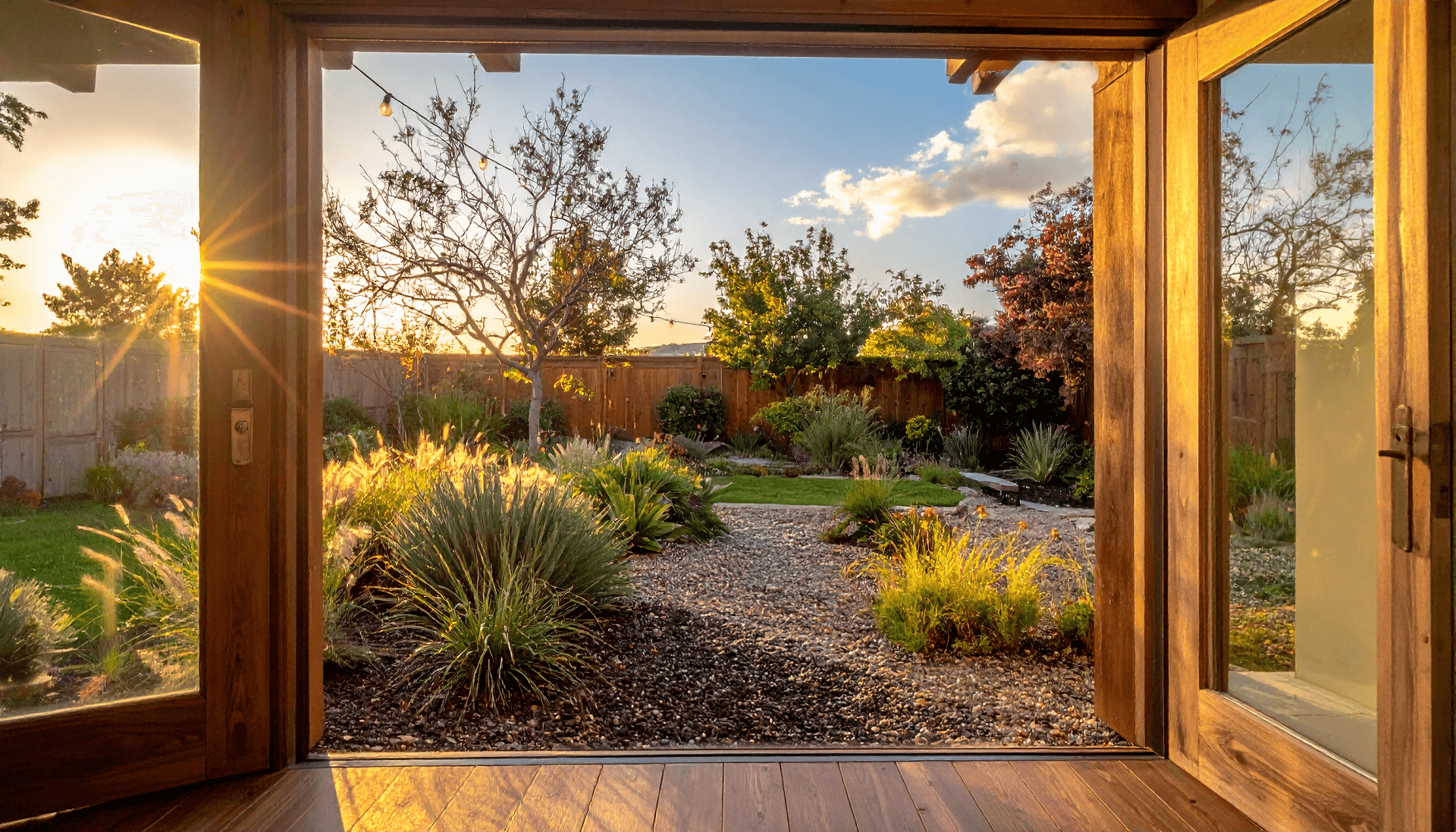
In the hills of Pacific Palisades or the sun-drenched streets of Culver City, the backyard isn’t just a patch of grass. It’s an extension of the living room. Southern California has perfected the “indoor-outdoor” lifestyle, where accordion glass doors disappear to reveal fire pits, infinity pools, and carefully curated greenery. But choosing the right types of plants for a Los Angeles landscape is trickier than it looks.
The microclimates across Los Angeles vary dramatically, from the moist, salty breeze of Malibu to the dry summer heat of the San Fernando Valley. A plant that thrives in Santa Monica may struggle in Studio City under very different conditions.
Homeowners who would like to boost their curb appeal while creating a more climate-conscious landscape should understand the role different plant categories play in the overall design.
The Main Types of Plants Used in Landscaping
Landscaping typically involves several key plant categories:
- Trees (for height, shade, and structure)
- Shrubs (for privacy and architectural form)
- Succulents and drought-tolerant plants (for water efficiency and sculptural design)
- Ornamental grasses (for movement and texture)
- Flowering plants (for color and pollinators)
- Groundcovers (for filling spaces, reducing exposed soil, and in some cases replacing turf)
1. Trees Used in Los Angeles Landscaping
Olive Trees (Olea europaea)
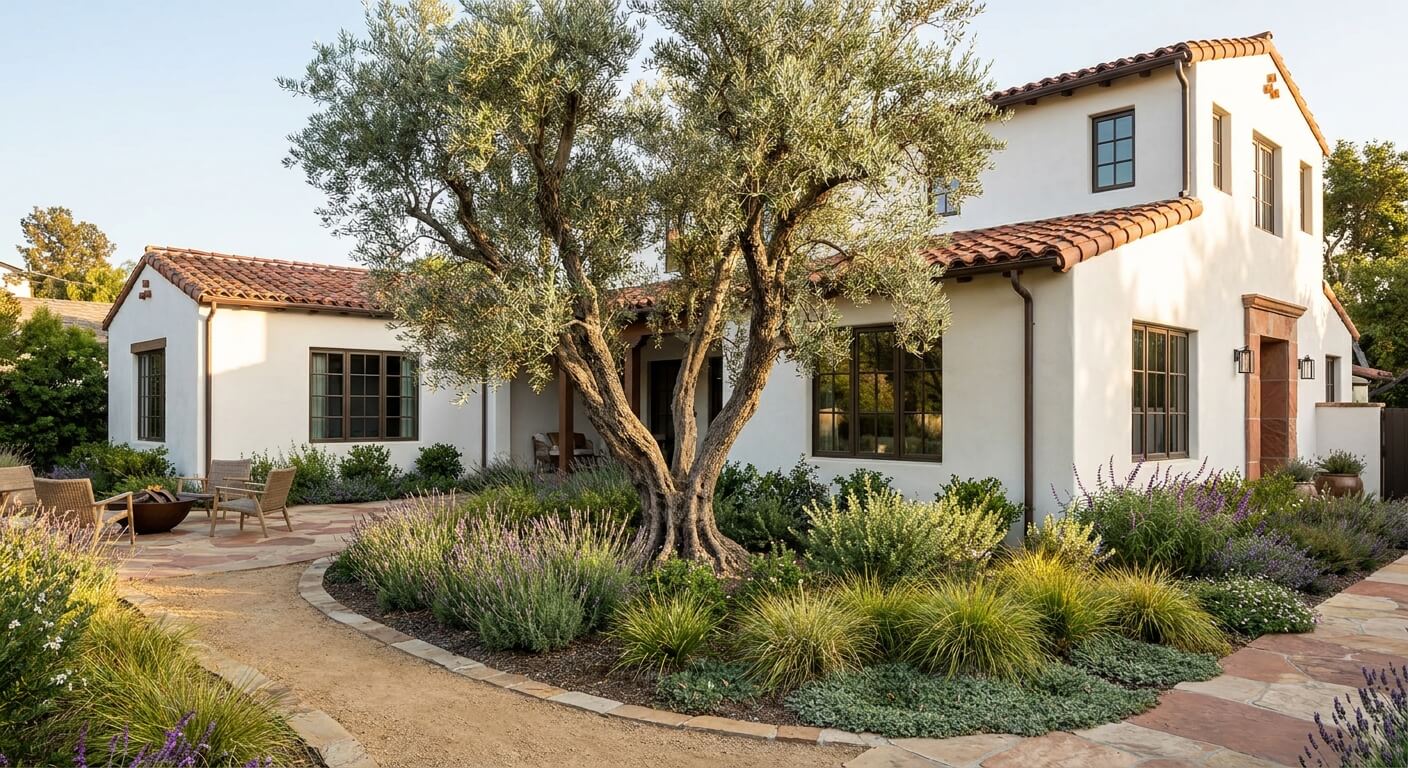
The olive tree may look gnarled and old, but few trees capture the Southern California look quite like it. These are icons of Los Angeles landscape design, with silvery-green foliage that works just as well with the clean lines of a modern home as it does with the rustic character of a Spanish Revival.
Designers often use fruitless or low-fruiting varieties such as ‘Swan Hill’ or ‘Wilsonii’ to get the look without as much messy fruit drop. Believe us, you don’t want purple oil stains on your expensive light-colored pavers. These trees are highly drought tolerant once established, making them well suited to Los Angeles landscapes. They also provide beautiful dappled shade, perfect for a mid-afternoon glass of wine on the patio.
2. Shrubs & Privacy Plants Used in Landscaping
Little Ollie (Dwarf Olive)
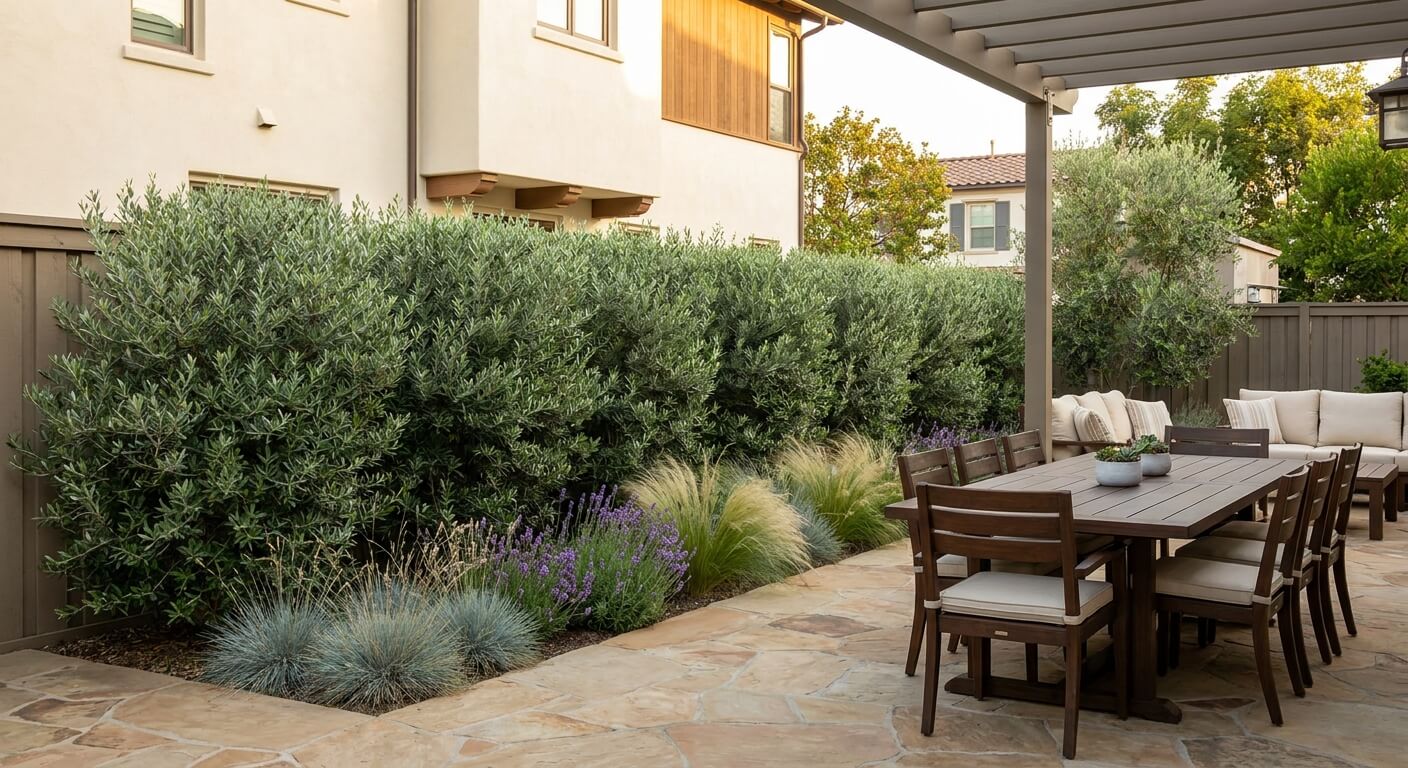
If you love the look of an olive tree but don’t have the vertical space, or you’re looking for a dense evergreen hedge, Little Ollie is a great option. It’s one of those shrubs that gives you the silvery-green Mediterranean look of an olive tree in a much more compact form.
It grows densely enough to provide privacy and structure without feeling like a generic wall of green, making it especially useful along property lines, around patios, or anywhere you want to create a more defined outdoor room.
Why Privacy Matters in LA
In neighborhoods like West Hollywood or Studio City, houses are often built close together. Privacy shrubs can help create defined outdoor rooms and screen neighboring windows without making the yard feel boxed in.
For homeowners trying to create a more private backyard or pool area, dense evergreen planting can soften property lines while still feeling intentional and landscaped. Little Ollie also handles inland heat well once established, which makes it a practical choice for warmer parts of Los Angeles.
Bougainvillea
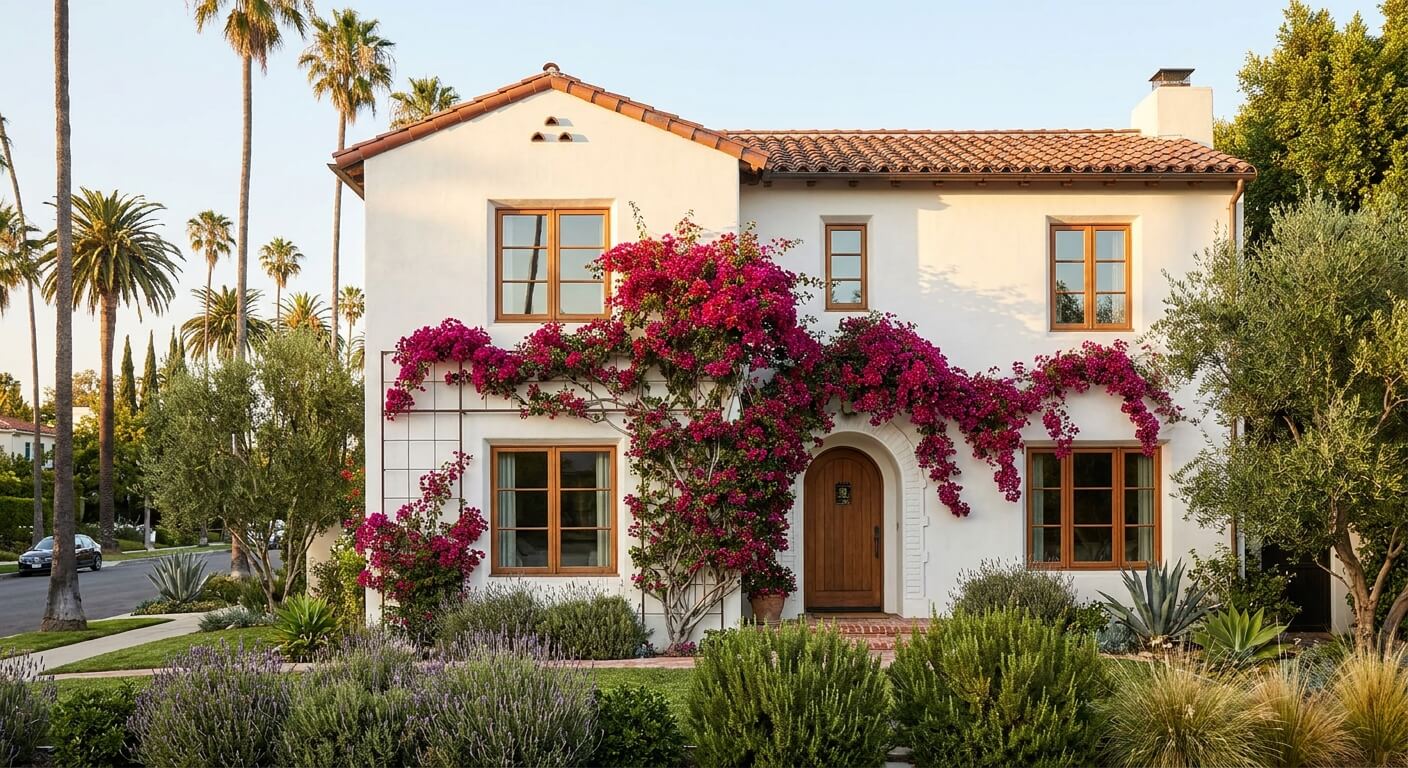
You’ve seen it cascading over white stucco walls in Santa Monica or climbing up a trellis in Malibu. Bougainvillea is one of the most recognizable flowering plants in Southern California, bringing a huge burst of color to walls, fences, and garden structures.
It thrives in heat and is surprisingly tough, but a word of caution: it has thorns, so it’s not the best choice right next to a narrow walkway where people may brush against it. As a backdrop or climbing accent, though, it can make a dramatic statement.
Westringia (Coast Rosemary)
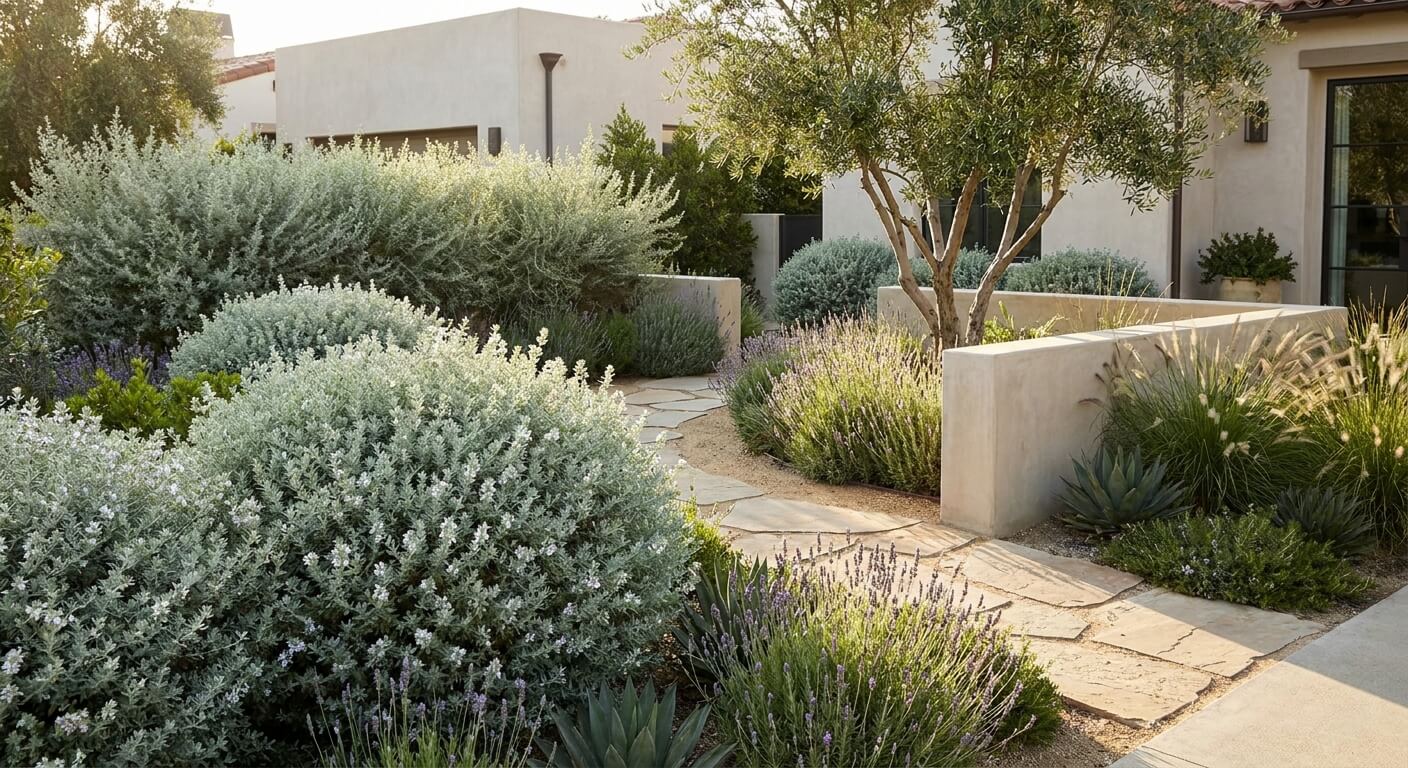
Don’t let the name fool you; it’s not the rosemary you cook with. Westringia is one of the most reliable evergreen shrubs for Los Angeles landscaping, with soft gray-green foliage that works well in both formal and more relaxed planting styles.
It can be trimmed into a structured hedge or rounded form, or left to grow naturally for a softer coastal look.
It’s particularly effective as a coastal landscaping plant in Los Angeles. Whether you’re dealing with the damp morning mist of the South Bay or the direct afternoon sun of Westwood, Westringia stays full and attractive. It handles wind, salt spray, and dry conditions well once established, making it a versatile choice across a range of LA microclimates.
3. Succulents & Drought-Tolerant Structural Plants
Agave attenuata (Fox Tail Agave)
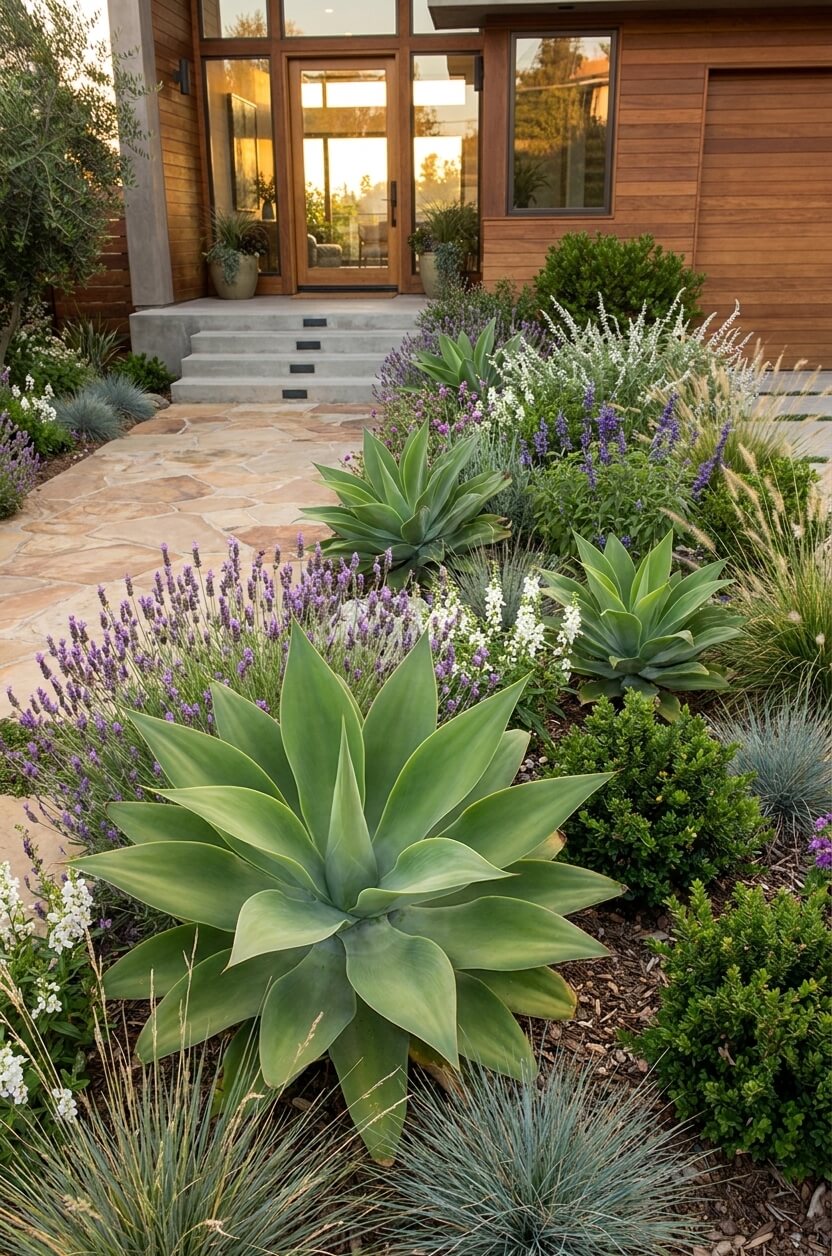
If you’re looking for modern landscaping plants popular in Los Angeles, Fox Tail Agave is probably already on your radar. Unlike some of its spikier cousins, this agave is soft and spineless, so there are no desert-induced ER visits here. Its big green rosettes look almost like giant flowers and add instant structure to a landscape.
It’s one of those low-maintenance plants for Los Angeles homes that actually delivers on the promise. Give it the right spot, decent drainage, and some sun, and it grows into a sculptural statement without demanding constant attention.
It’s especially popular in front yard landscaping throughout Southern California because it stays green year-round and works beautifully with softer shrubs, grasses, and flowering plants. It can handle the coastal conditions of the Pacific Palisades as well as warmer areas like Brentwood, as long as it’s planted in the right conditions.
Blue Glow Agave
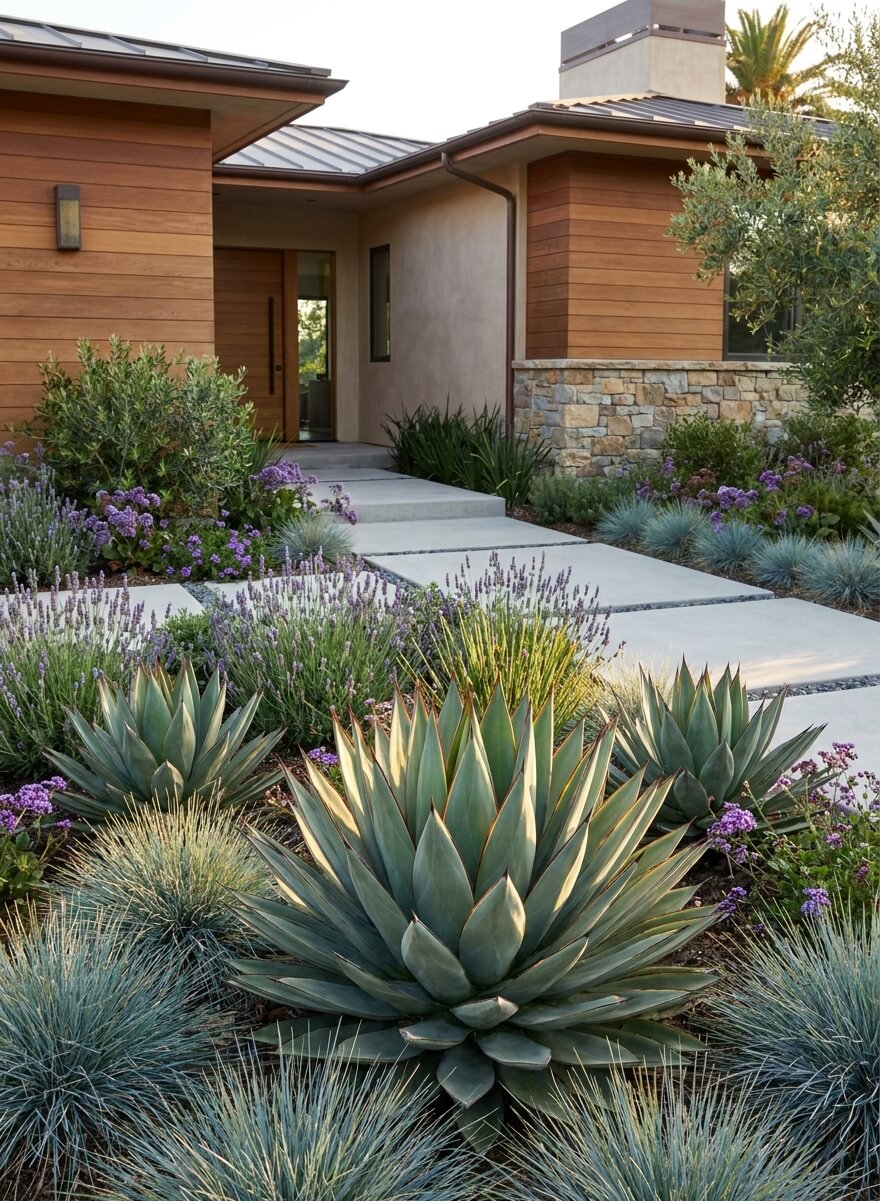
While we’re talking about succulents, ‘Blue Glow’ deserves its own moment. It stays more compact than Fox Tail Agave, but its blue-green leaves edged in red and gold catch the sunlight in a way that really does make the plant look like it’s glowing.
It’s a favorite for modern and minimalist Los Angeles landscapes because it gives you a strong architectural shape without taking over the entire bed. It looks especially good against concrete, gravel, dark stone, or softer ornamental grasses where the color and form can really stand out.
It’s also one of those water-efficient landscaping plants in Los Angeles that doesn’t make the yard feel like a sad little desert experiment. Once established, it needs very little water, but you still get color, structure, and that polished LA look without the water appetite of a traditional lawn.
Senecio Mandraliscae (Blue Chalksticks)
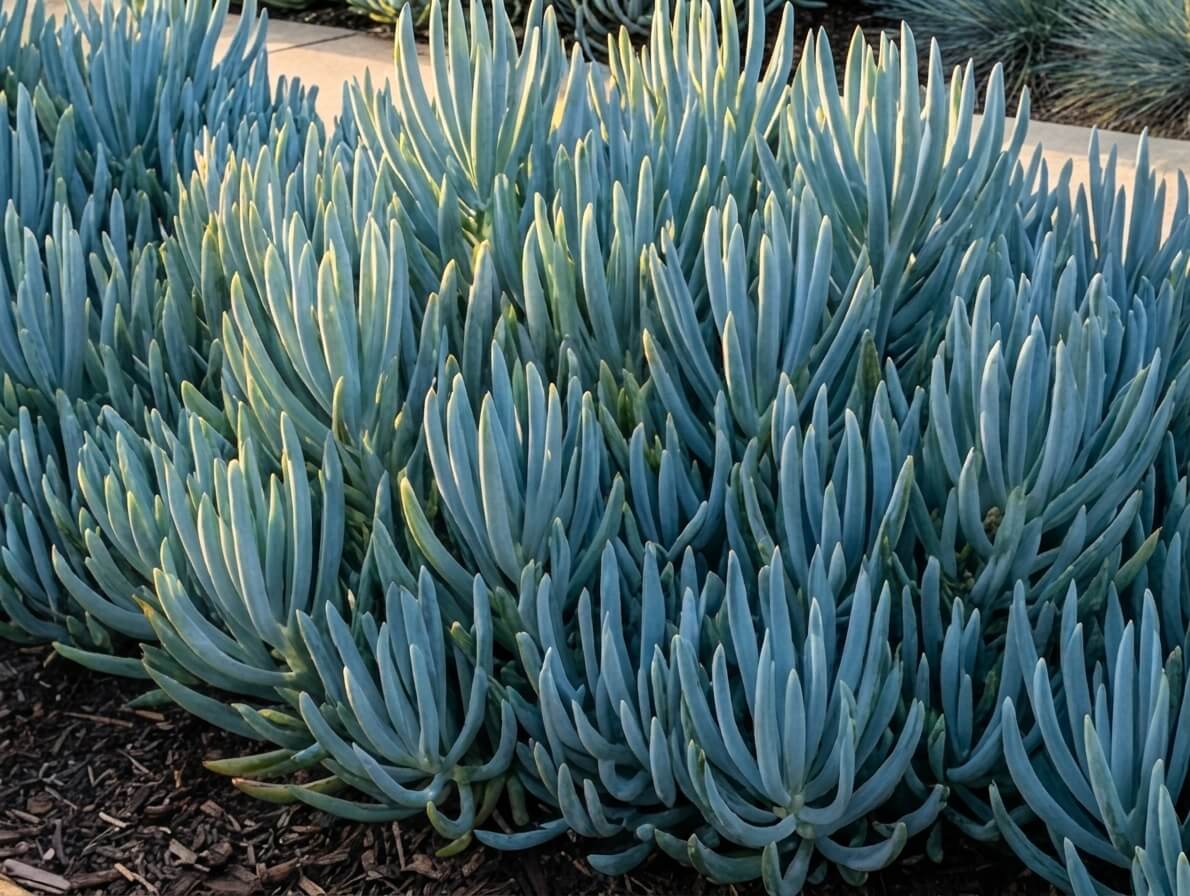
If you want a groundcover that looks a little like it belongs in an underwater coral reef, Blue Chalksticks is hard to beat. Its powdery blue-gray foliage adds a completely different color to the garden and looks especially good next to deeper greens, warm stone, or dark mulch.
It’s a popular choice for front yard landscaping in Southern California because it spreads into a dense, sculptural groundcover that can help fill awkward gaps between larger plants. In modern landscapes, it’s often used in broad drifts or long planting strips along driveways, walkways, and pool areas to emphasize clean lines without looking stiff.
It’s also low-water once established and happiest in well-draining soil, which makes it a practical fit for many Los Angeles landscapes. Just give it enough room to spread, because once it’s happy, it definitely doesn’t stay politely in its original little spot.
4. Ornamental Grasses Used in Landscaping
Deer Grass (Muhlenbergia rigens)
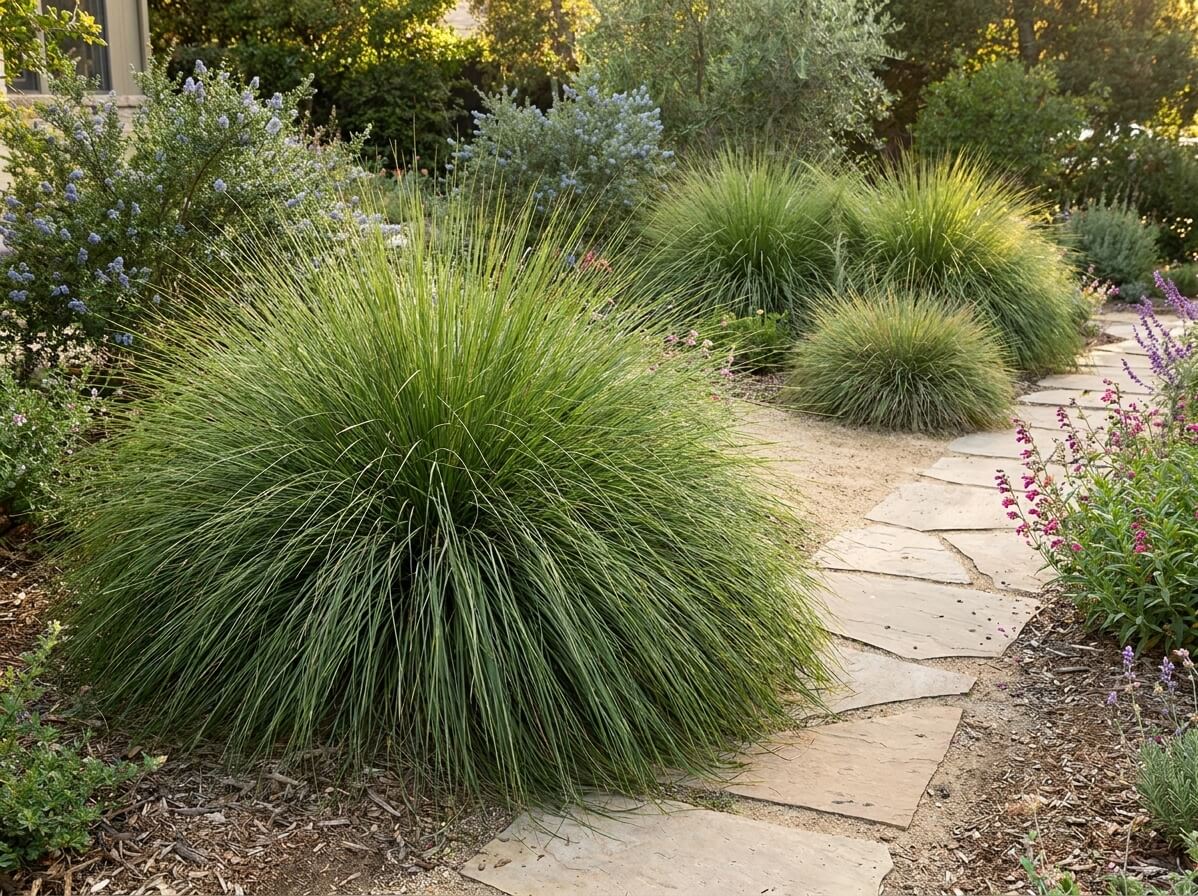
Landscaping isn’t just about what you see. Movement matters too, and Deer Grass brings a lot of it. Its long, arching blades form a soft fountain shape, while tall flower stalks catch the breeze and add that little bit of drama without making the garden feel fussy.
It’s a California native ornamental grass that works beautifully in Los Angeles landscapes, especially when you want to soften hardscape, line a pathway, or add structure to a larger planting bed. It gets fairly substantial, so this isn’t the grass to cram into a tiny corner and hope for the best.
Once established, it’s also very water-wise, and honestly, that combination of low water + big architectural impact is exactly what we want from an LA landscape plant.
5. Flowering Plants & Pollinator-Friendly Landscaping
Lavender (Lavandula)
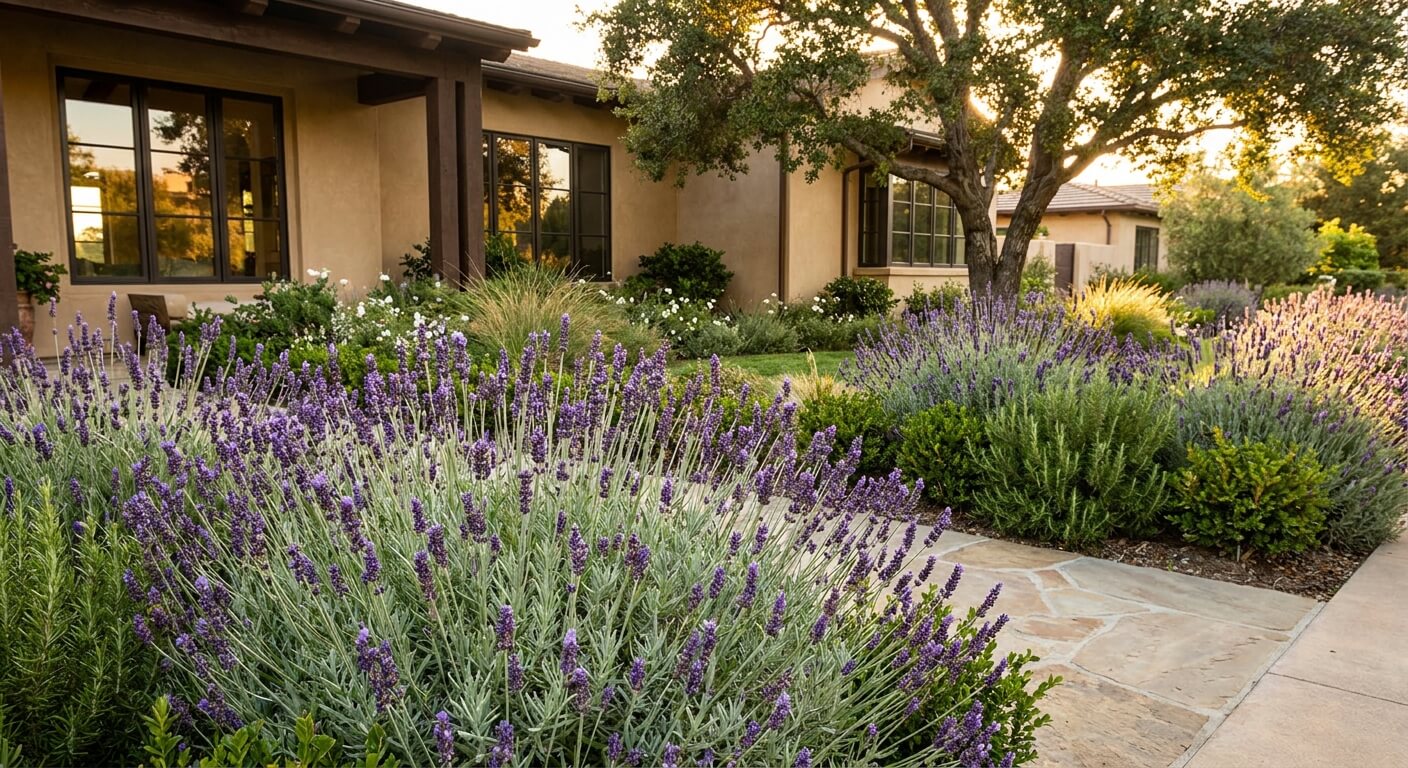
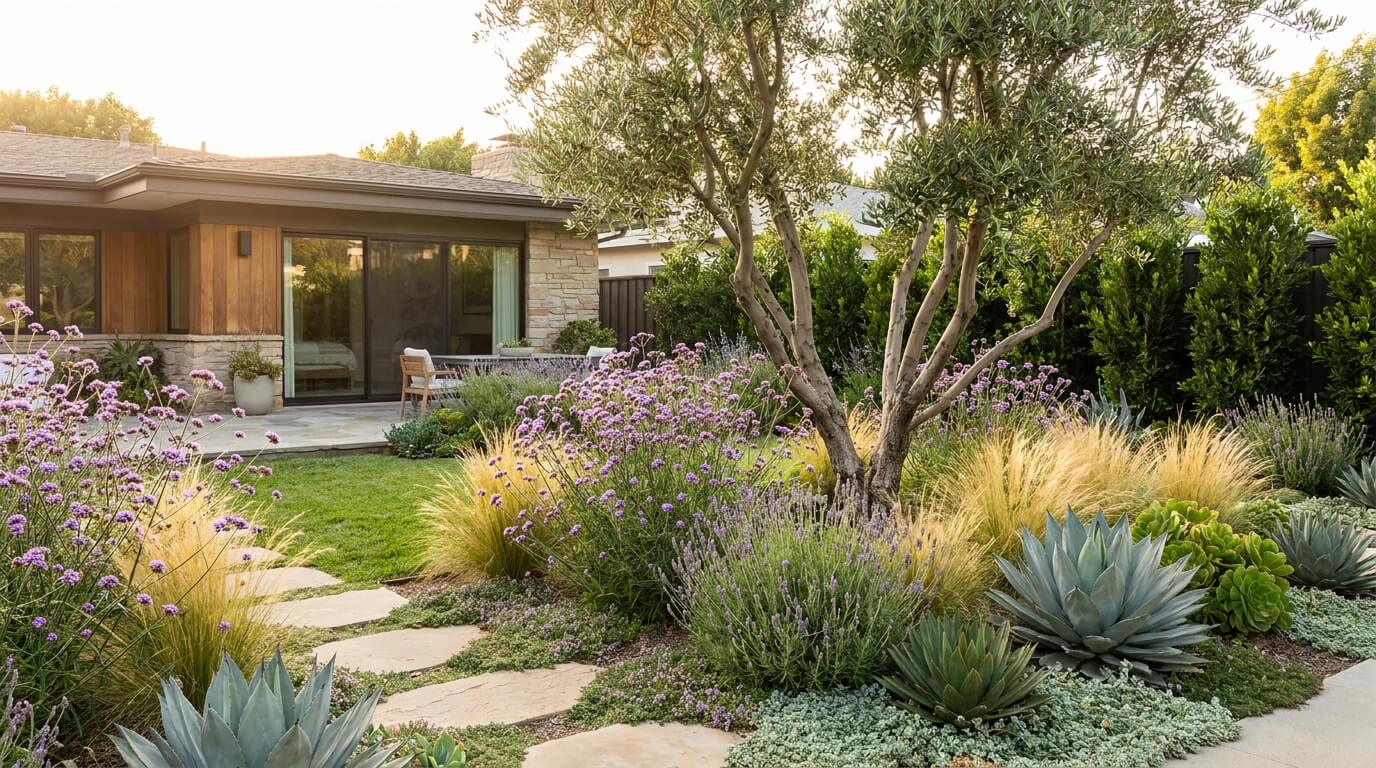
French and Spanish lavender work beautifully in Southern California. They bring that relaxed Ojai-meets-LA feeling without requiring the garden to become a full-time job. The silvery foliage looks good even when the plants aren’t in peak bloom, and when those purple flowers show up, they add color, fragrance, and a ton of movement from visiting bees.
Lavender fits especially well in Mediterranean-style Los Angeles landscapes, but it also works with modern homes when it’s planted in looser drifts instead of perfectly clipped rows. Give it plenty of sun and well-draining soil, because lavender would much rather be a little dry than sit around with soggy roots.
And yes, it’s a great pollinator plant, so you get something that looks polished while actually doing a little work for the garden ecosystem too.
Creating a Habitat
Speaking of bees, there’s been a real shift toward landscapes that do more than just look pretty. Homeowners are increasingly mixing ornamental plants with species that support bees, butterflies, hummingbirds, and other pollinators.
Lavender isn’t a California native, but it can still be a useful pollinator-friendly plant in the right setting. If you want to take that idea further, adding true California natives can make the garden even more supportive of local wildlife while still keeping the design polished.
The California Native Plant Society is a great resource for finding plants that are actually native to your area and understanding how they fit into a Southern California landscape.
Kangaroo Paw (Anigozanthos)
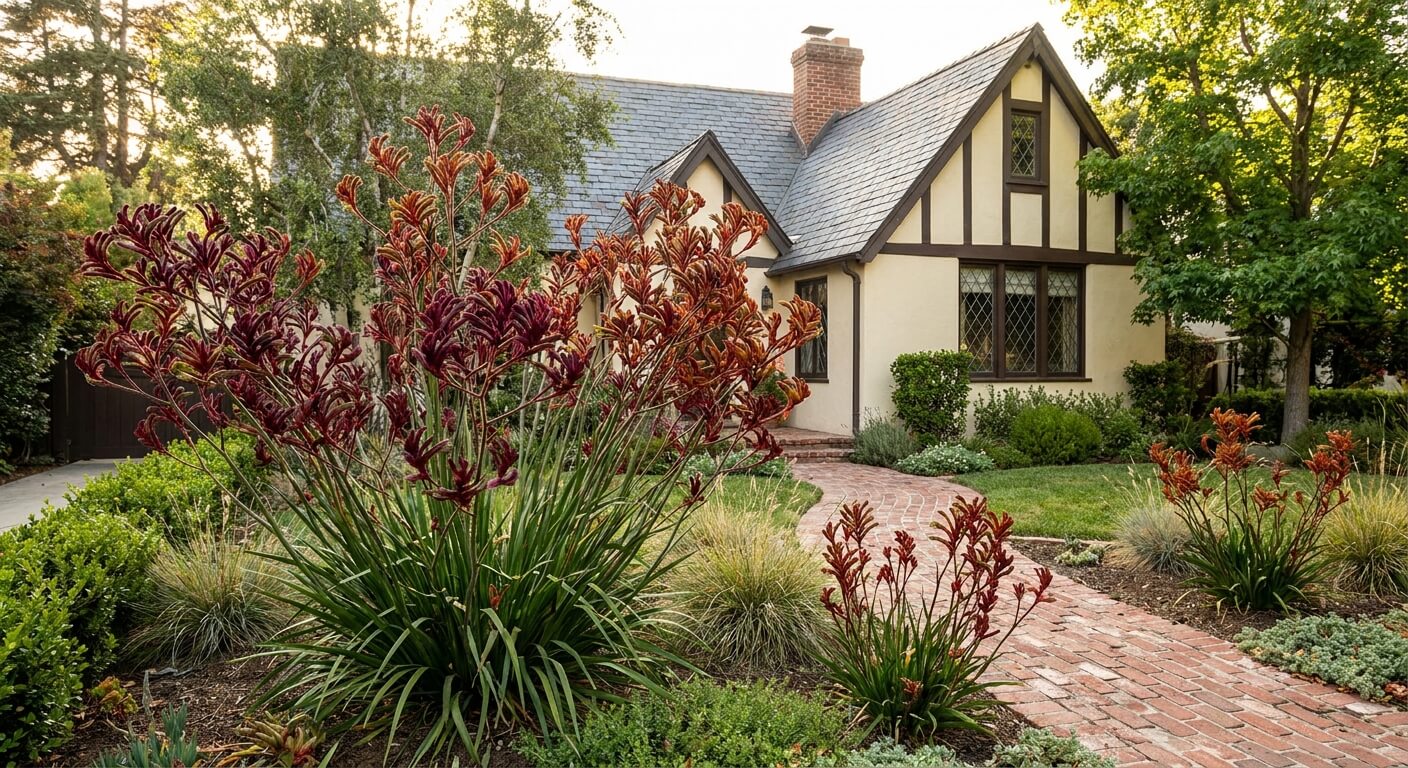
Kangaroo Paw gets its name from those fuzzy, tubular flowers that honestly do look a little like tiny kangaroo paws. The blooms come in reds, oranges, yellows, pinks, and even deep burgundy, so they’re an easy way to bring in color without making the landscape feel overly floral.
It’s especially good in modern and contemporary Los Angeles landscapes, where the upright flower stalks add height and movement without taking up a ton of space. Hummingbirds love the flowers too, which gives you another little bit of life in the garden.
Kangaroo Paw is drought tolerant once established, but it wants good drainage and doesn’t appreciate sitting in wet soil. Basically, give it sunshine, don’t drown it, and let it be weird and beautiful.
The Intersection of Hardscape and Softscape
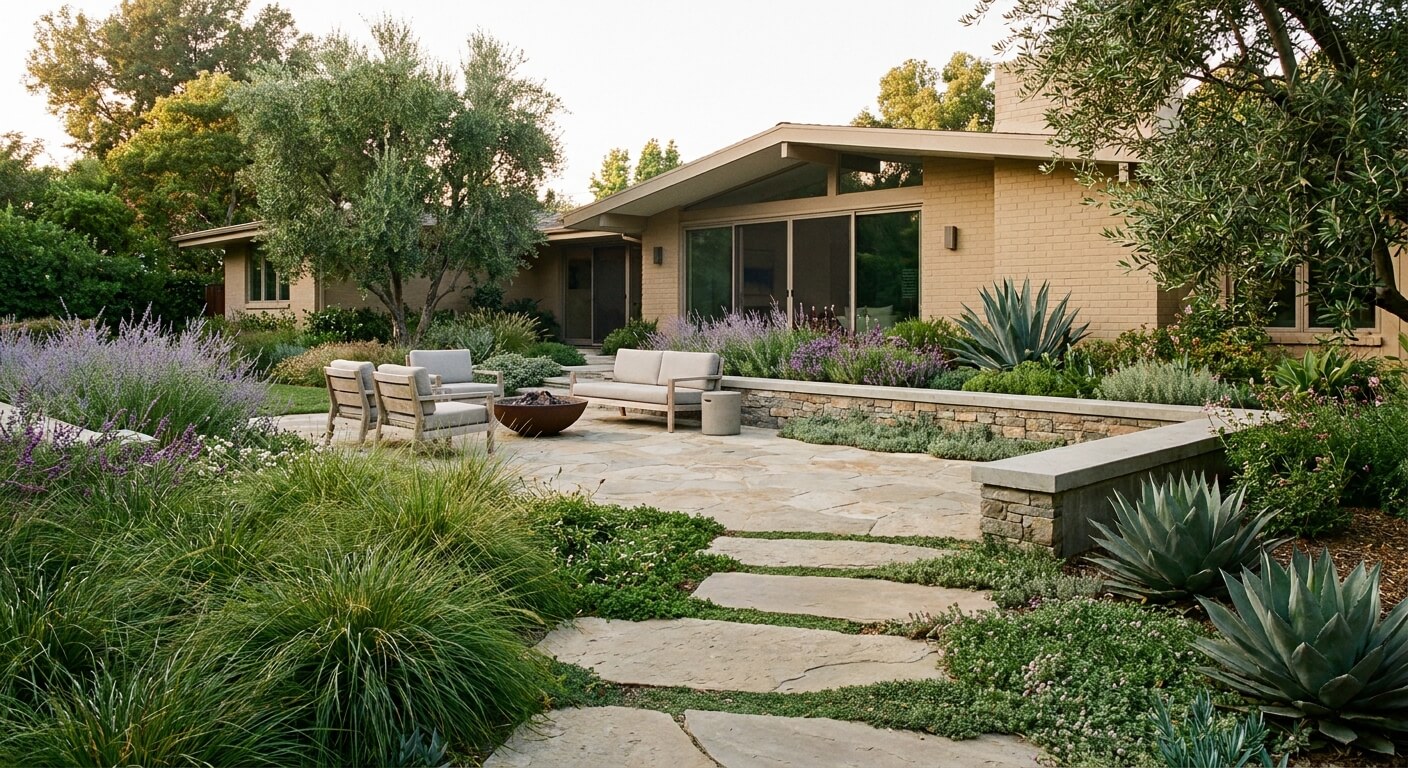
Plants don’t exist in a vacuum. The best landscapes are really about how the planting works with everything around it, from patios and pathways to retaining walls, pools, and outdoor kitchens.
A bold agave can make a concrete walkway feel more intentional. Soft ornamental grasses can take the edge off a large expanse of stone. Groundcovers can creep between stepping stones and make a hardscape-heavy yard feel a little less, well…hard.
That balance between hardscape and softscape is what keeps a Los Angeles landscape from looking either overbuilt or like somebody just went wild at the nursery. The two should feel like they were designed together from the beginning.
Why Native-ish is the New Standard
Los Angeles homeowners are increasingly moving toward sustainable landscapes that make sense for our climate. That can mean California natives, drought-tolerant Mediterranean plants, and other non-invasive species that can handle Southern California conditions without constantly fighting the environment.
That doesn’t mean every garden needs to become a native plant restoration project. We love a good olive tree and a dramatic agave way too much for that. The goal is to choose plants that use water responsibly, thrive in the right conditions, and still give you the privacy, color, structure, and personality you want from the landscape.
Basically: right plant, right place, less babysitting.
Tips for a Thriving LA Garden
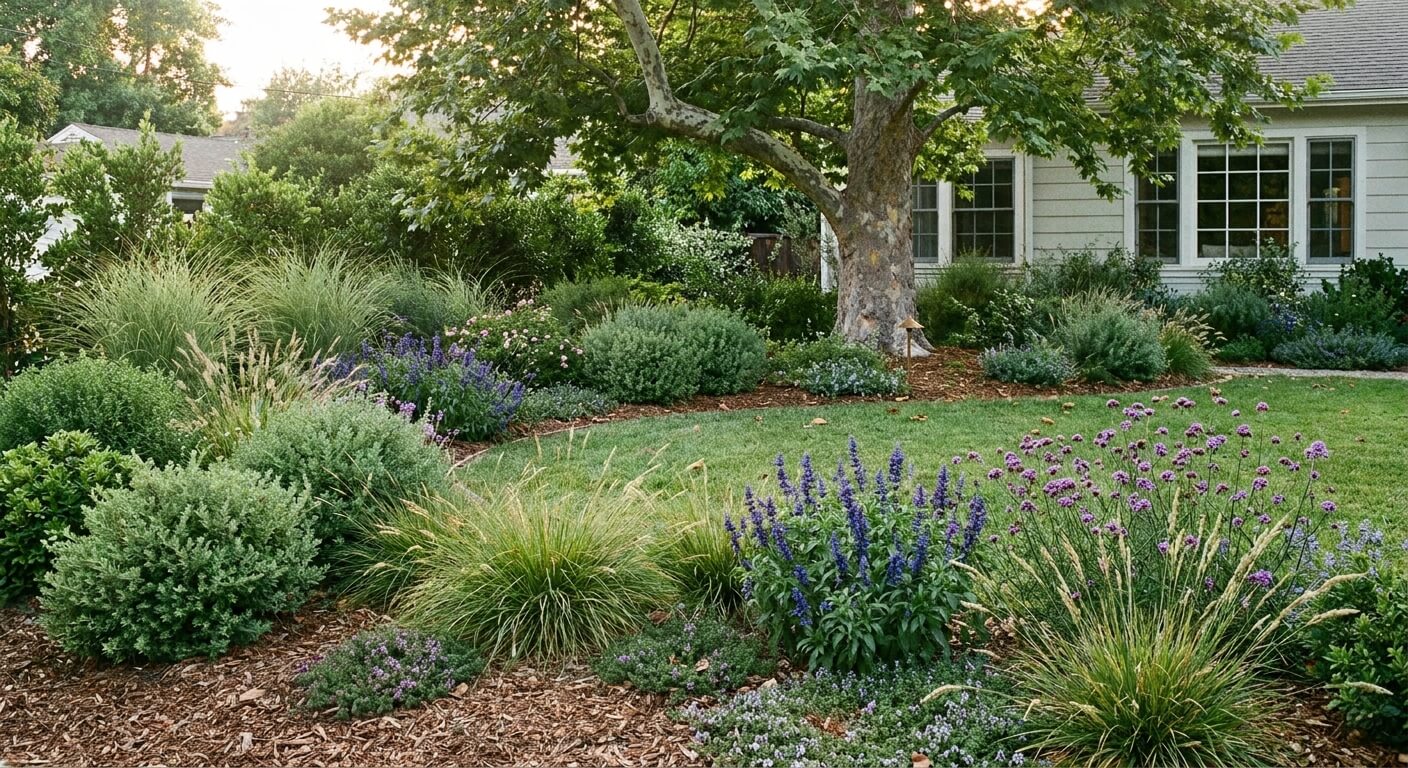
Even the best plant choices can struggle if they’re planted in the wrong conditions. A beautiful landscape starts with choosing plants that actually make sense for the site, then giving them what they need to settle in and thrive.
- Pay attention to the soil. Los Angeles soil can vary wildly from one neighborhood to the next, so don’t assume every plant wants the same treatment. Good drainage is especially important for succulents, lavender, and many drought-tolerant plants.
- Use mulch strategically. Mulch helps retain moisture, regulate soil temperature, and suppress weeds, but avoid piling it directly against plant stems, trunks, or succulent crowns. More is not always better.
- Group plants by water needs. This is called hydrozoning, and it makes irrigation much more efficient. Your lavender probably shouldn’t be on the same watering schedule as a thirstier tropical plant. Everybody gets along better when they’re not fighting over the sprinkler schedule.
- Don’t forget the landscape after sunset. Thoughtful low-voltage lighting can completely change how a garden feels at night. Highlighting a sculptural agave, mature olive tree, or ornamental grass can make the landscape feel just as intentional after dark as it does during the day.
Final Word
The plants you choose are only part of the story. A great Los Angeles landscape comes from mixing the right types of plants together so each one has a job to do, whether that’s creating shade, adding privacy, softening hardscape, bringing in color, or simply making the yard feel more alive.
You don’t need every trendy plant you see on Pinterest, and you definitely don’t need to turn your yard into a botanical collection. A few well-chosen trees, shrubs, grasses, succulents, flowering plants, and groundcovers can create a landscape that feels layered, intentional, and completely your own.
At the end of the day, the best plant palette is the one that fits your home, your microclimate, and how you actually want to use the space.